A five-floor, multi-tenant residential building in Washington, DC was paying a monthly fee for a cloud-managed system that controlled which floors each resident could reach by elevator. RBD Security replaced it with a locally hosted Keyscan elevator controller. The work was completed in one day, with no outage for residents. This is what was there, what we installed and what the owner got out of it.
The starting point
The building uses floor authorization in its elevator: a resident’s card or fob enables only the floors that person is allowed to reach. The equipment behind it was a set of Mercury-based controller boards managed through a cloud service, and the service was billed every month.
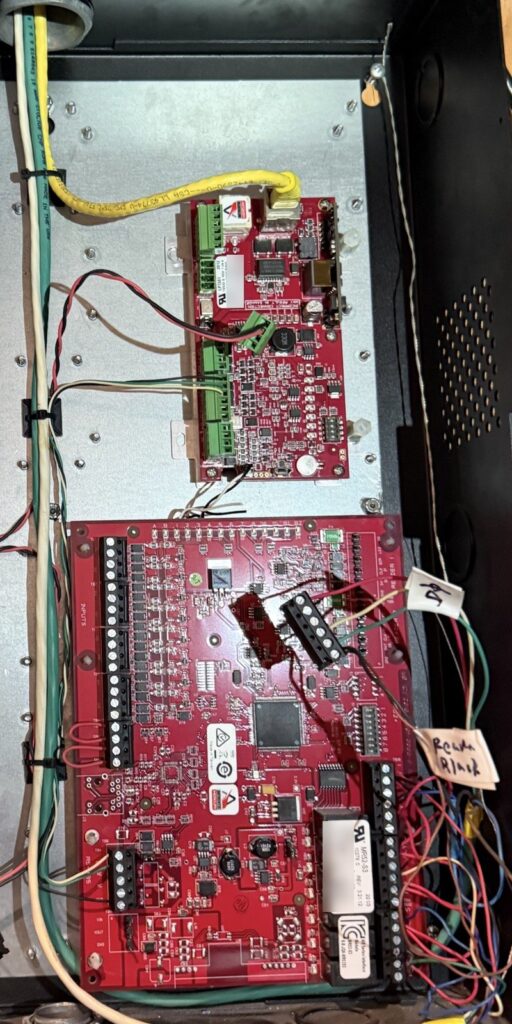
The aim was to drop the monthly fee and improve reliability, without making the elevator any less convenient for residents and without a large capital project.
What we installed
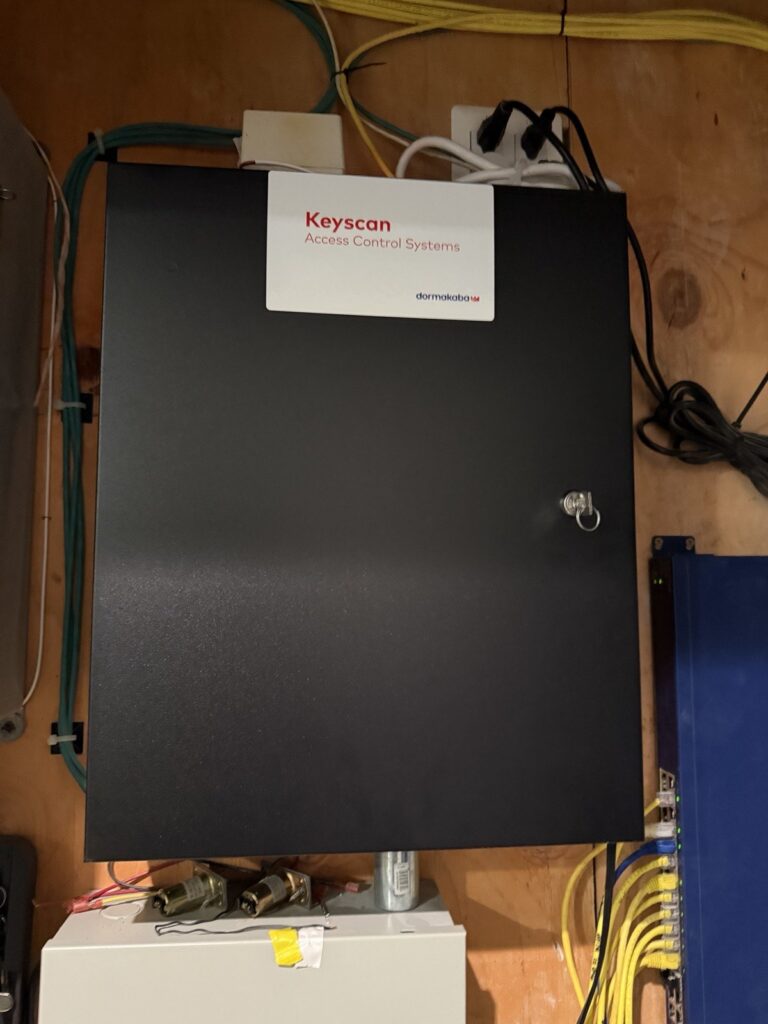
We installed a Keyscan EC1500 elevator floor controller from dormakaba. The EC1500 is the one-cab model in the Keyscan line. It controls eight floors with the relay board it ships with and can be expanded to 40, so a five-floor building needs no extra boards.
The system is managed in Keyscan Aurora software on a computer in the building. dormakaba sells Aurora without recurring fees, and that is what removed the monthly bill. The cardholder list and the floor permissions are now kept in the building.
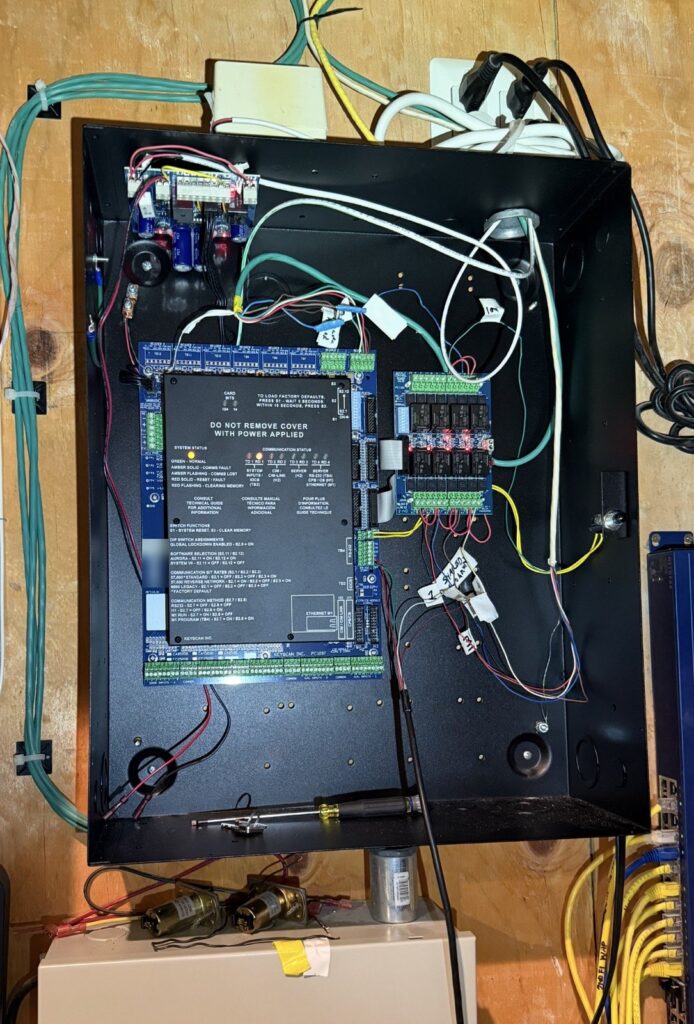
Floor authorization is set per cardholder. Each card or fob belongs to a group, and the group sets which floors it can reach and at what times.
The building’s existing key fobs were enrolled in Aurora, so residents kept the fobs they already had.
The controller also keeps working on its own if the computer is off or the network is down. The credentials are stored in the controller, and it holds up to 6,000 transactions until it can report back to the software.
One day, no outage
The changeover was completed the same day it started, and residents had no outage. Jobs like this go quickly when the preparation is done before anyone touches the elevator connections:
- Survey first. Record how the existing controller connects to the elevator and which floors are restricted.
- Program ahead. Enter the cardholders, groups and schedules in the new software before the changeover.
- Swap and test. Mount and power the new controller, move the elevator connections over, then test every floor with cards that should work and cards that should not.
- Hand over. Show the person who manages the building how to add and remove cards, and set up backups.
What the owner got
- No monthly software fee. The recurring charge is gone.
- A more reliable system. It is managed on site and does not depend on an outside service.
- The same convenience. Residents kept their fobs and use the elevator the way they did before.
- A small one-time cost in place of an open-ended monthly one.
- Its own data. Cardholder records are kept in the building.
Is a locally hosted system right for your building?
Not always. Cloud-managed access control suits many properties: there is no computer to look after on site, and a manager can make changes from anywhere. A locally hosted system like Keyscan suits a building that wants no subscription and has someone who can keep one computer running and backed up. We install both, and our guide to cloud vs. on-site costs for condo and apartment buildings covers the trade-offs.
Card formats and readers Keyscan works with
Keeping the existing fobs depended on Keyscan being able to read their format. Reader formats are selected in Aurora, and dormakaba’s panel documentation lists these:
- Keyscan 36-bit. The factory default, available in 125 kHz and 13.56 MHz credentials.
- HID 37-bit, in the H10302 and H10304 formats.
- HID Corporate 1000, 35-bit and 48-bit.
- Standard 26-bit. Supported, but dormakaba advises against it because the format is open and easy to duplicate.
- MIFARE card serial numbers, 32-bit and 40-bit.
- Other formats from 26 to 48 bits, through a pass-through setting.
- Special-order formats: an Indala format and University 1000 56-bit.
- FIPS/TWIC 75-bit government credentials, as legacy support.
Some of these settings need current panel firmware. A few older 32-bit and 34-bit formats are also listed, but dormakaba does not recommend them.
Keyscan panels are not limited to Keyscan-branded readers. They take readers with a standard Wiegand output, which includes:
- HID iCLASS and iCLASS SE readers, including models with the Seos profile. dormakaba no longer sells the iCLASS SE legacy readers, and HID Signo is the replacement.
- HID Signo readers in three groups: KS-1 for Seos; KS-2 for iCLASS SE, iCLASS SR, Seos and other 13.56 MHz credentials; and KS-0, which also reads 125 kHz HID Prox and Indala.
- Farpointe and RCI readers, which appear in the Keyscan catalog.
- OSDP readers on the newer KC series panels.
One caution: cards encoded with a custom key, such as Keyscan Elite Key, only work with readers that carry the same key. We check the card and reader format at the walk-through, before quoting.
Questions we get about elevator changeovers
Can we keep our existing cards, fobs and readers?
Often, yes. On this job the existing fobs were enrolled in Aurora and stayed in use. The formats and readers Keyscan supports are listed above, and dormakaba notes that retrofits can often reuse existing equipment, credentials included.
Does the elevator company have to be involved?
The access controller does not run the elevator. It closes relays that tell the elevator’s own controller which floor buttons to enable, and those connection points are provided by the elevator company. When an existing floor-control system is being replaced, the connections are usually already there. A first-time installation needs the elevator company to provide them.
How long will the elevator be out of service?
It depends on the building. On this job the work was done in a day and residents had no outage. We agree the schedule with the building manager before work starts.
Can we still make changes remotely with a locally hosted system?
Yes, with an add-on. Aurora has an optional web client for making everyday changes from a browser or phone. Without it, changes are made at the computer that runs the software.
Keyscan service in DC, Maryland and Virginia
RBD Security is a Keyscan dealer, and our technicians are factory trained and certified on Keyscan. Our Keyscan access control page covers the panels we service, System VII upgrades and taking over an existing system. Call us to arrange a walk-through.
Keyscan and Aurora are trademarks of dormakaba. Other product names are trademarks of their owners. RBD Security is an independent dealer and service company.