
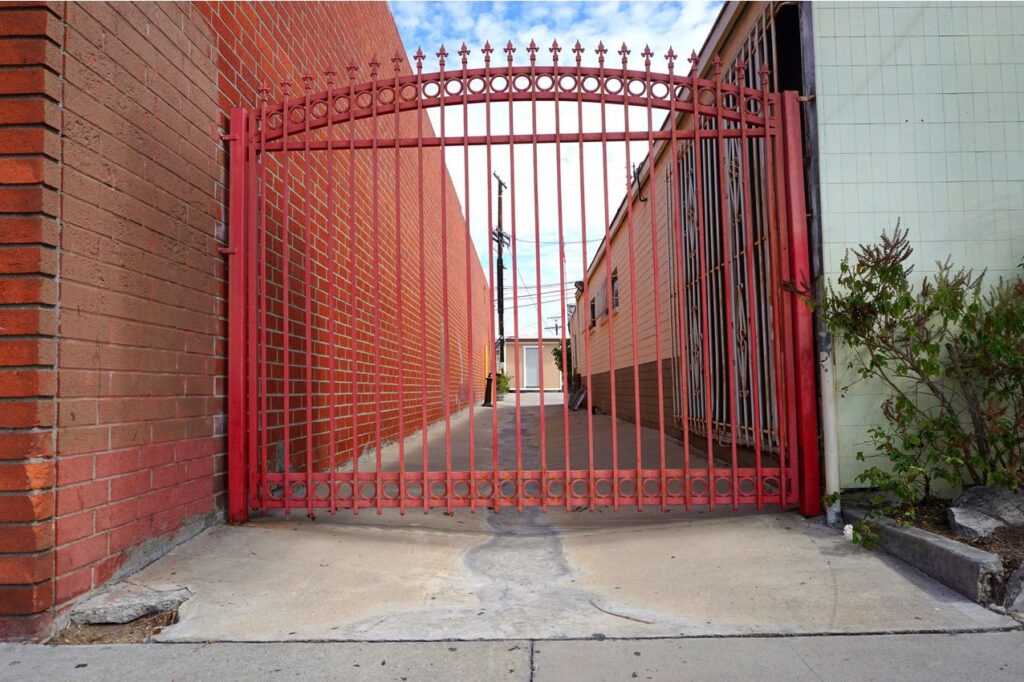
Most of the attention on rowhouse security goes to the front door, which is the side the neighbors can see. The alley side is where the real risk is. It is unlit, it is out of view from the street, and a wooden fence with a latch is often all that separates it from the house. If you own a rowhouse in Washington, DC and want to improve one thing, improve the alley gate.
This guide covers what a good alley gate looks like, how to lock it, what to add around it, and the one rule that limits all of this: the gate must still let you out.
What Makes the Alley Side Vulnerable
Walk your alley and look at it the way a burglar does. A typical DC rowhouse rear has some combination of:
- A wooden privacy fence with a gate that latches from the inside and can be opened by reaching over.
- A rear door with a glass panel, or a basement door below grade.
- A parking pad with a chain-link gate or no gate at all.
- No lighting beyond a porch fixture nobody turns on.
- Trash and recycling bins that give an easy step over the fence.
None of that is visible from the street, so an intruder can take their time. A gate that actually locks, and a fence that cannot be climbed with the help of a bin, change the calculation.
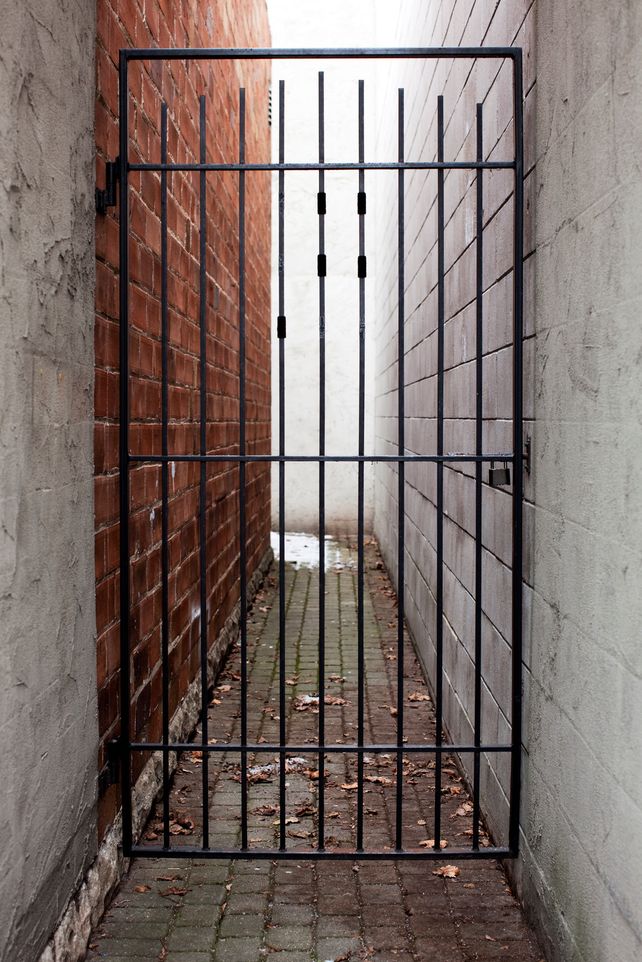
Steel Gate Basics
A fabricated steel gate does three things a wooden one does not: it cannot be kicked through, it cannot be lifted off its hinges when the hinge pins are welded or capped, and it holds a proper lock. The design points that matter:
- Frame and infill. A welded tube-steel frame with vertical pickets, expanded metal or solid panels. Pickets at 4-inch spacing keep the gate from being a ladder; a solid lower panel stops anything being pushed through.
- Height. Match the fence line, usually 6 feet. A gate taller than the fence beside it just moves the climb to the fence.
- Hinges. Heavy weld-on hinges with the pins capped or welded, so the gate cannot be lifted off.
- Posts and footing. A gate is only as strong as the post it hangs on. On a rowhouse rear, that means a steel post set in concrete or anchored into the masonry wall, not a wooden fence post.
- Closer. A spring hinge or hydraulic closer so the gate shuts and latches on its own. An unlatched gate is the most common failure we see.
- Finish. Galvanized or powder-coated steel for anything that faces an alley. Primer and paint works but needs maintenance.
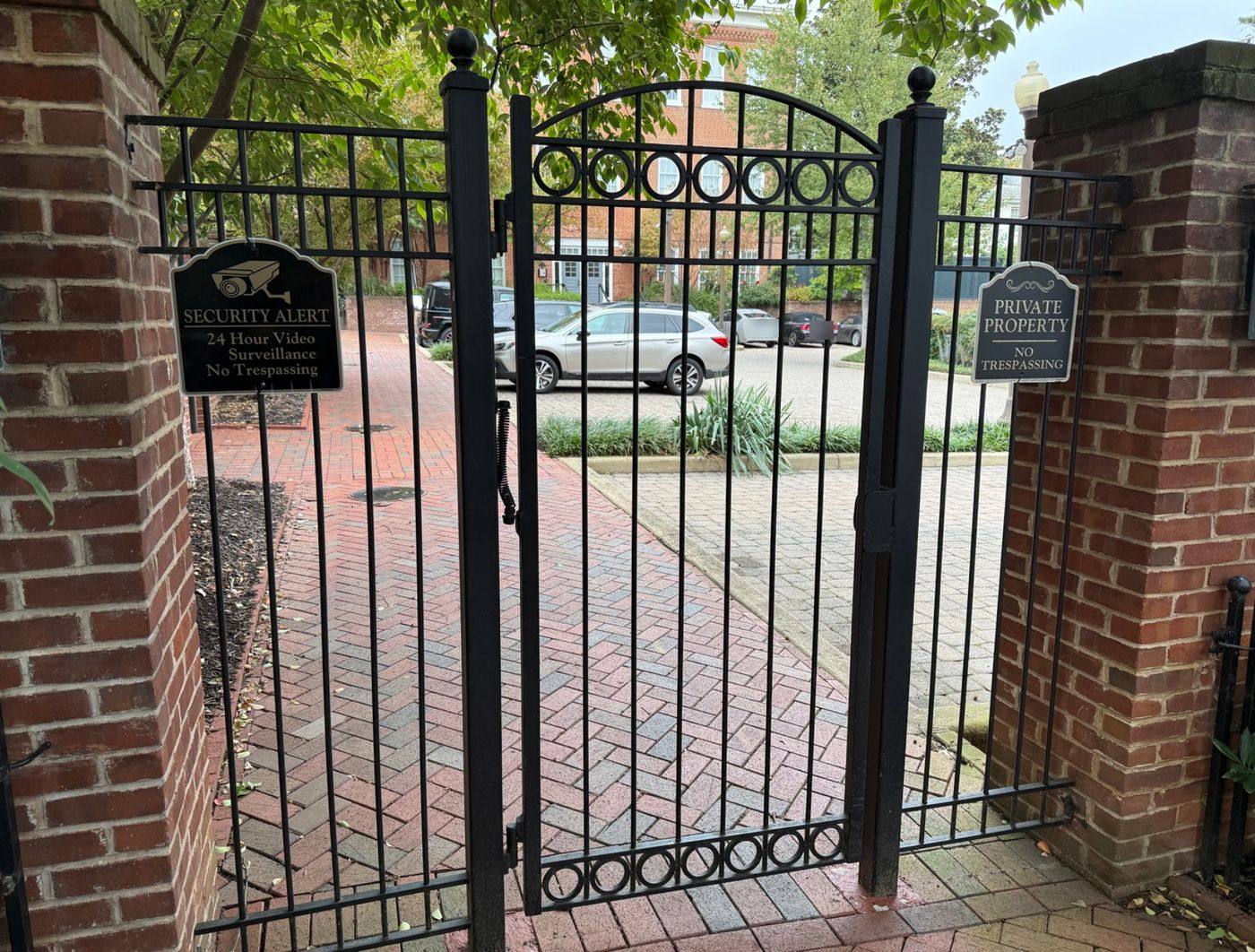
For a parking pad, a wider swing or slide gate serves the car and a separate pedestrian gate serves people. Automating the vehicle gate is a separate decision, covered in our LiftMaster vs DoorKing guide.
Choosing the Lock
The lock decides whether the gate is actually secure. The main options, in the order we usually suggest them for a rowhouse alley gate:
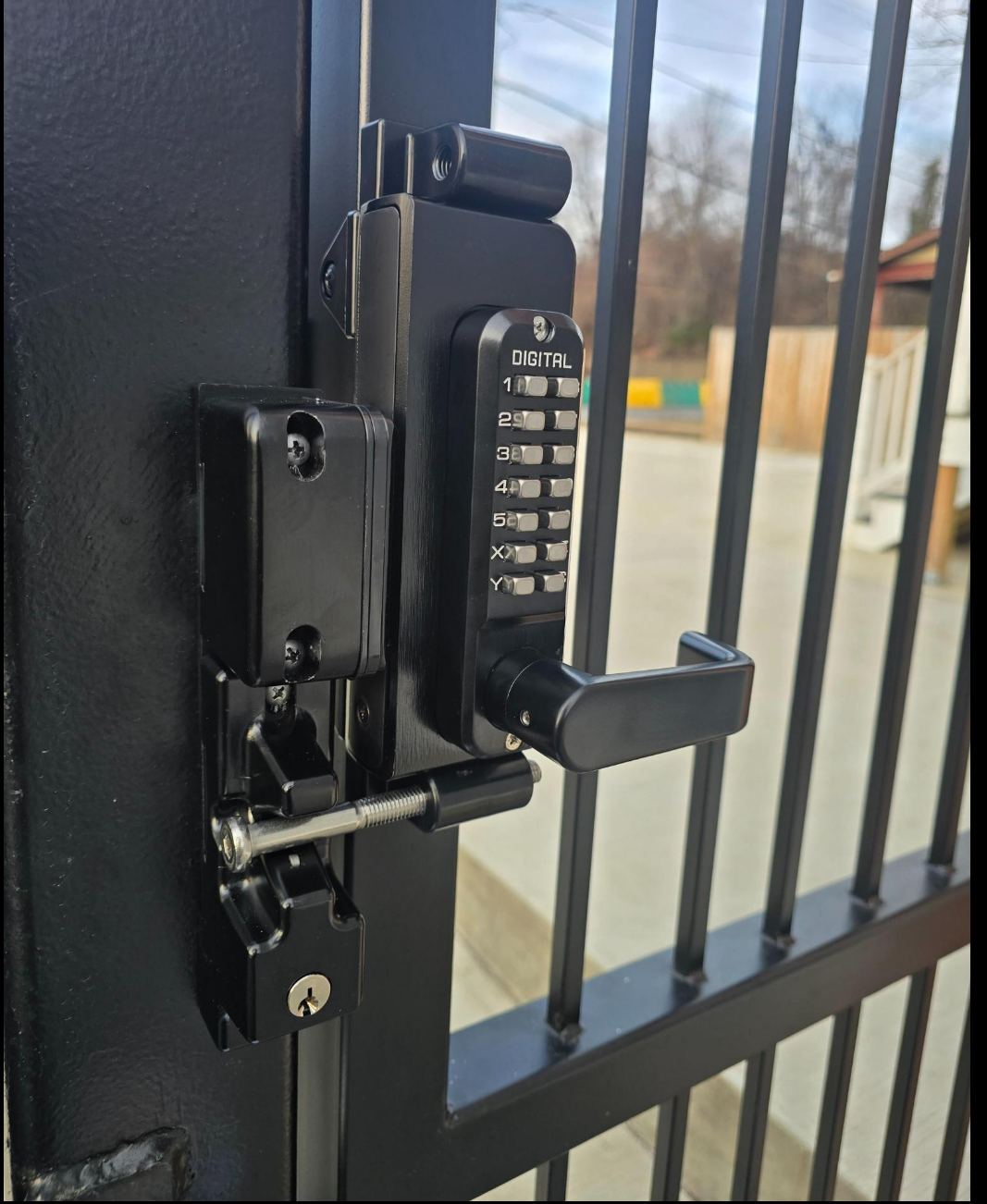
Mechanical keypad lock. No wiring, no batteries, works in any weather, and gives you a code to share with a dog walker, a contractor or a delivery driver without handing out keys. The lock in the photo below is a Lockey SUMO that RBD installed on a custom gate. Change the code when someone no longer needs it. See our full post on pedestrian gate locks for electric, solar and battery-powered alternatives.
Keyed gate lock with a deadbolt. A gate box welded into the frame with a deadbolt and a cylinder. Simple and strong, but everyone who needs access needs a key. A good fit when the gate is used by one household and keyed alike with the back door.
Electric strike or maglock with an intercom. Right for a multi-unit building where residents need fobs or codes and visitors need to call up. It needs power, a weatherproof enclosure and a plan for power failures. Usually more than a single rowhouse needs.
What to avoid: a padlock and hasp. Padlocks are cut or shimmed in seconds, and a padlocked gate cannot be opened from inside in an emergency.
The Gate Must Still Let You Out
A rear door and the yard behind it are often part of the house’s escape route. DC follows the International Building and Residential Codes with local amendments, published by the Department of Buildings. The principle is simple: anyone inside must be able to get out without a key, a tool or special knowledge. A gate that can only be opened with a key from both sides fails that test.
The practical answer is a lock with a free-exit inside lever or thumbturn, so the gate is locked from the alley and opens from the yard with one motion. Every lock type above has a version that does this. If an installer proposes a double-keyed gate lock, ask why.
For a historic district, a rear gate that is not visible from a public street is generally lower-impact than front work, but check with the Historic Preservation Office if the gate is on an alley that counts as a public way or if you are changing a masonry wall. The Office of Planning lists some work exempt from preservation review.
What to Add Around the Gate
The gate is the hard part. These make it work better:
- Lighting. A dusk-to-dawn or motion-activated LED over the gate and the rear door. Mount it high enough that it cannot be unscrewed from the ground.
- A camera that sees the gate and the door. One camera at the rear corner of the house usually covers both. Our camera planning guide covers placement and night performance.
- Bin placement. Keep trash and recycling bins on the alley side of the fence, or chain them so they cannot be moved to the fence as a step.
- Trim the climbing aids. Tree limbs, utility boxes, a neighbor’s shed roof. Anything within reach of the fence top is a ladder.
- The rear door itself. A gate buys time; the door still needs a deadbolt with a 1-inch throw and a reinforced strike. If the door has a glass panel, the fix is laminated glass or a security film, not a double-cylinder deadbolt, which would need a key to get out.
Working With Neighbours
In a block of attached houses, your fence is half of someone else’s. A shared alley gate at the end of a run of yards is common in neighborhoods like Dupont Circle and Adams Morgan and needs agreement on who holds the code or keys and who pays for maintenance. A keypad lock solves most of that, since everyone gets the same code and no one has to copy keys. If the gate crosses a public alley, it needs District approval; most rear gates on private lot lines do not.
How RBD Security Builds Alley Gates
RBD designs, fabricates and installs steel gates for rowhouses and small buildings across Washington, DC and nearby Maryland and Virginia. We measure the opening, check what the posts can be anchored to, and fabricate the gate in our shop or on site. The lock, closer and hinges are specified as part of the gate, not added afterwards, so the gate closes and latches on its own from the first day. If you want a camera or a light at the same time, we install those in the same visit. Powder coating is done at a partner shop; a painted or galvanized finish can also be specified.
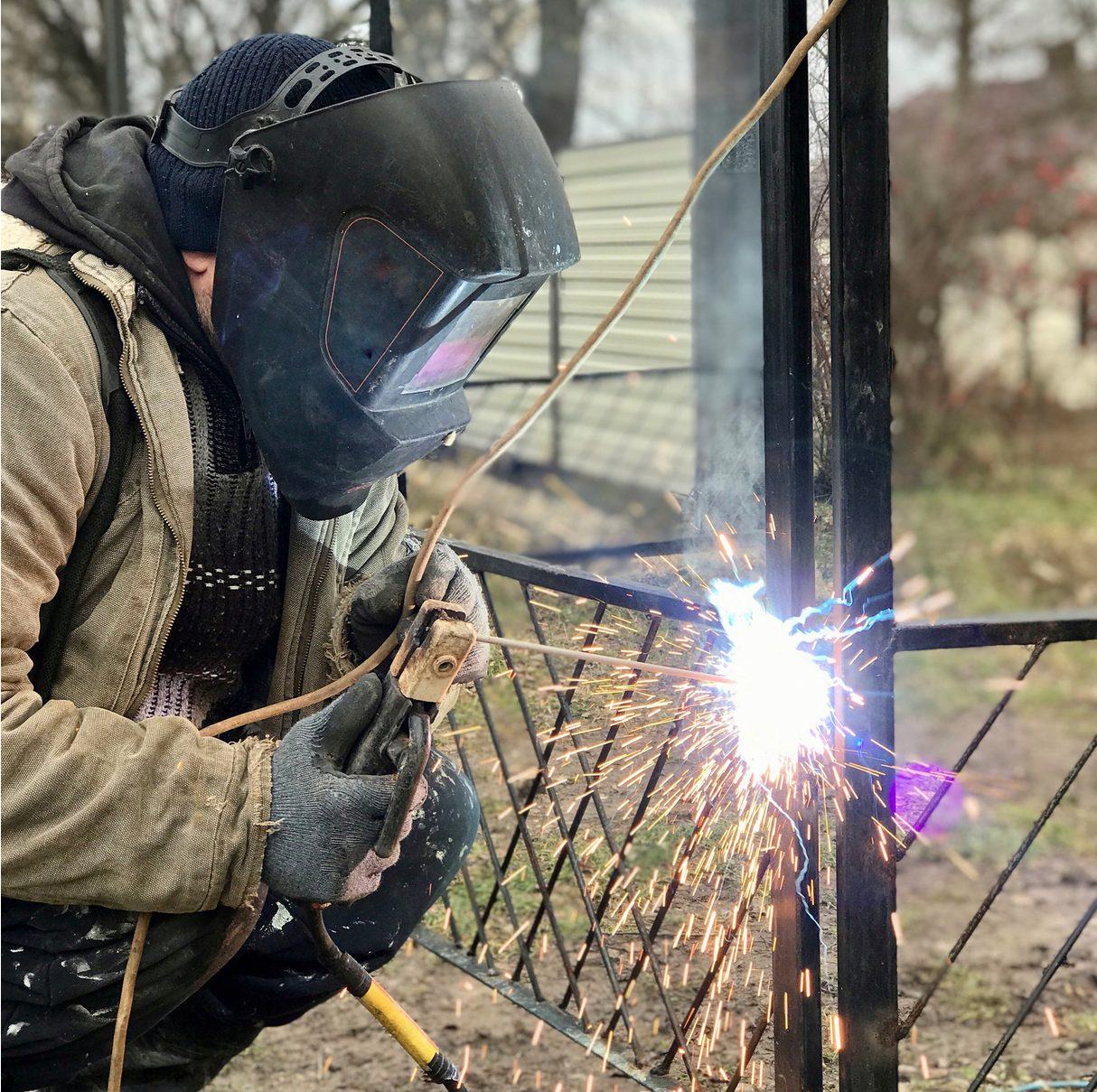
Read more about our gates and fences and custom welding services.
Frequently Asked Questions
What is the best lock for an alley gate?
For a single rowhouse, a mechanical keypad lock with a free-exit inside lever. It needs no power, works in winter, and lets you give a code to anyone who needs in without copying keys.
Can I put a padlock on my back gate?
You can, but it is the weakest option and it blocks the gate as an exit. A proper gate lock with a key or code outside and a lever inside is safer and more secure.
Do I need a permit for a rear gate in DC?
A gate on your own lot line that does not block an exit usually does not need a building permit. Gates across a public alley, changes to a masonry wall or work in a historic district can need approval. Ask DOB or HPO if in doubt.
How much does a steel alley gate cost?
It depends on width, height, infill, finish and what the posts can anchor to. Send photos and rough dimensions and RBD can give a range over the phone before a site visit.
Secure the Alley Side
Call RBD Security at (202) 709-9466 with a photo of your rear gate or fence. We fabricate and install steel gates, locks, lighting and cameras across DC, Maryland and Northern Virginia.