
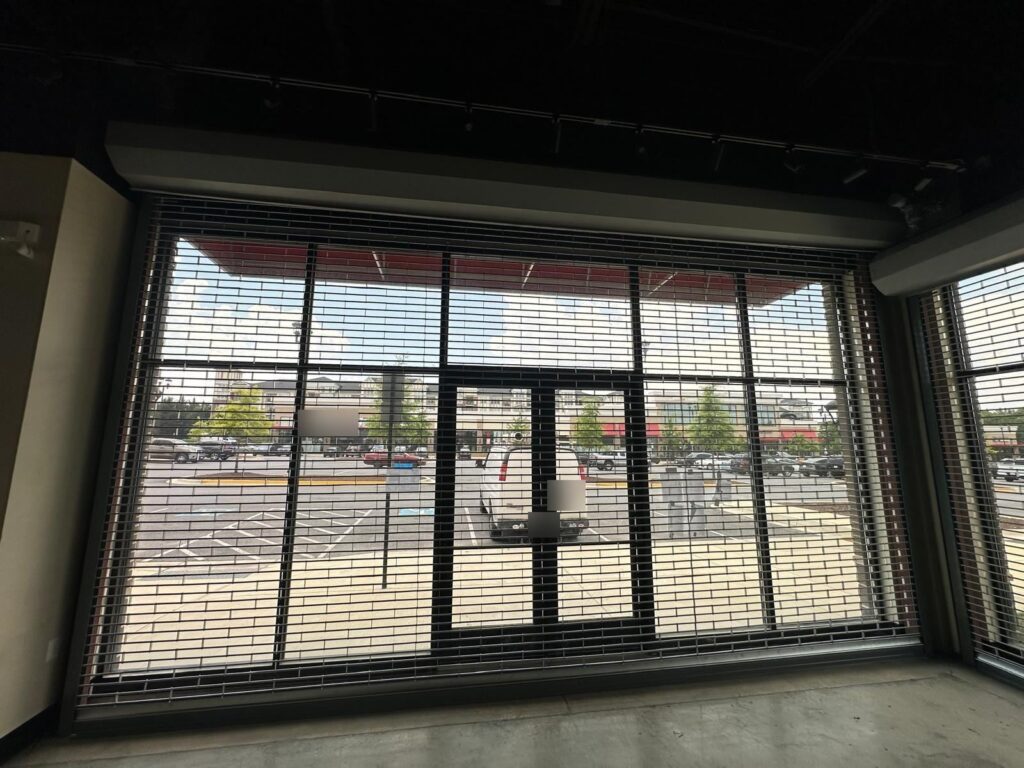
Glass storefronts sell. They also make a shop an easy target after closing: one broken pane can put the whole display within reach. For stores with high-value merchandise, a rolling security grille behind the glass is one of the most effective upgrades available. This guide explains how grilles work, how they compare with solid shutters, and what to plan for before installing one in Washington, DC.
What a Rolling Security Grille Is
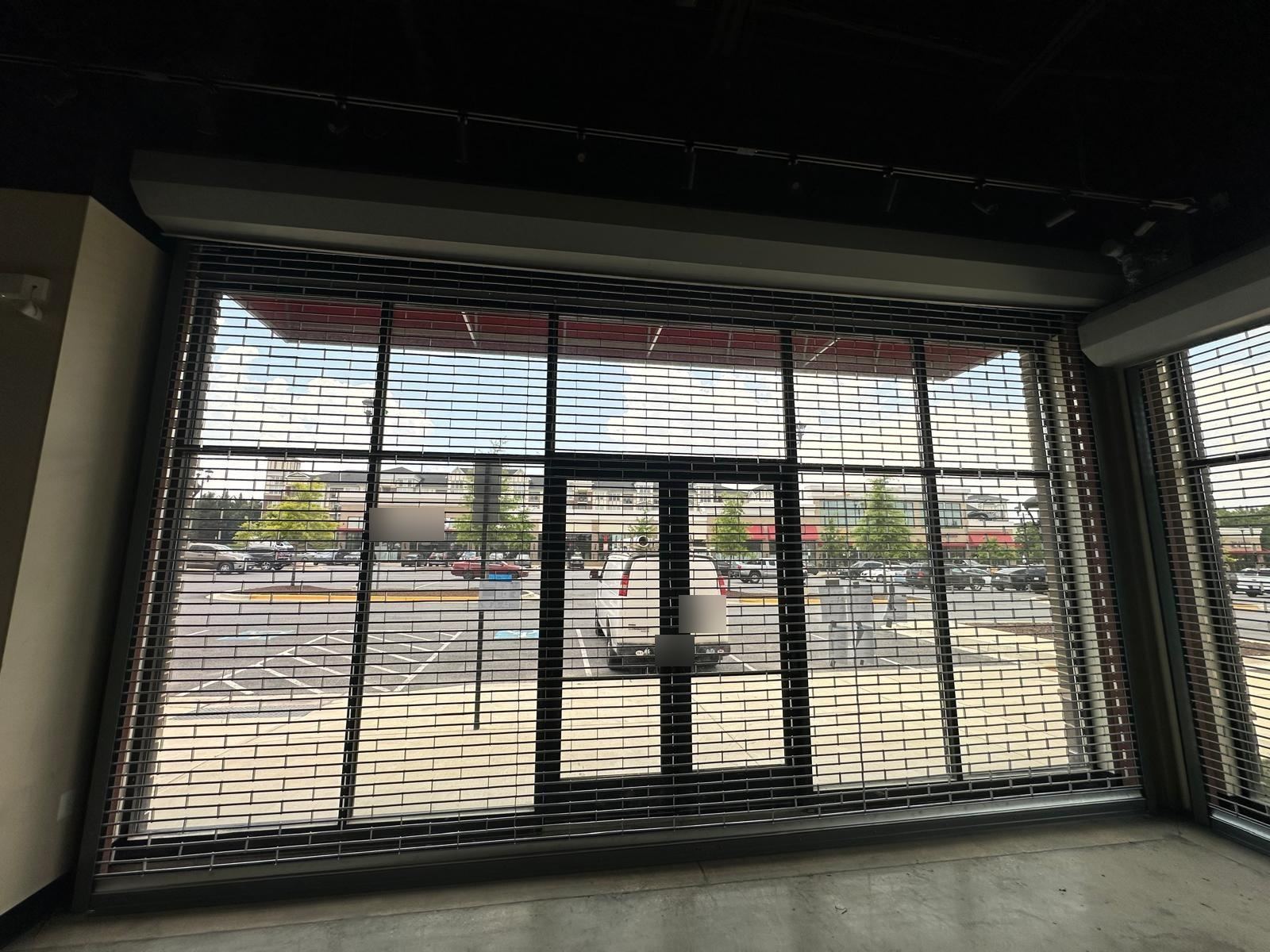
A rolling grille is a curtain of metal rods and links that rolls up into a hood above the opening and comes down at closing time. Unlike a solid roll-up door, it is open: manufacturers describe open-curtain grilles as allowing air circulation and full visual access, so people can still see in and out (Cornell).
That openness is the point for retail. After hours, passers-by can still see the displays and lighting, and police and neighbors can see inside, while the grille stops anyone who breaks the glass from reaching the merchandise.
Grilles vs. Solid Shutters
| Rolling grille | Solid rolling shutter or door | |
|---|---|---|
| Visibility after hours | Displays stay visible | Storefront is closed off |
| Airflow | Air keeps moving | Blocked |
| Typical use | Retail windows and entrances, mall storefronts | Loading docks, back doors, closed-off openings |
| Look from the street | Light and open | Heavy, “closed” look |
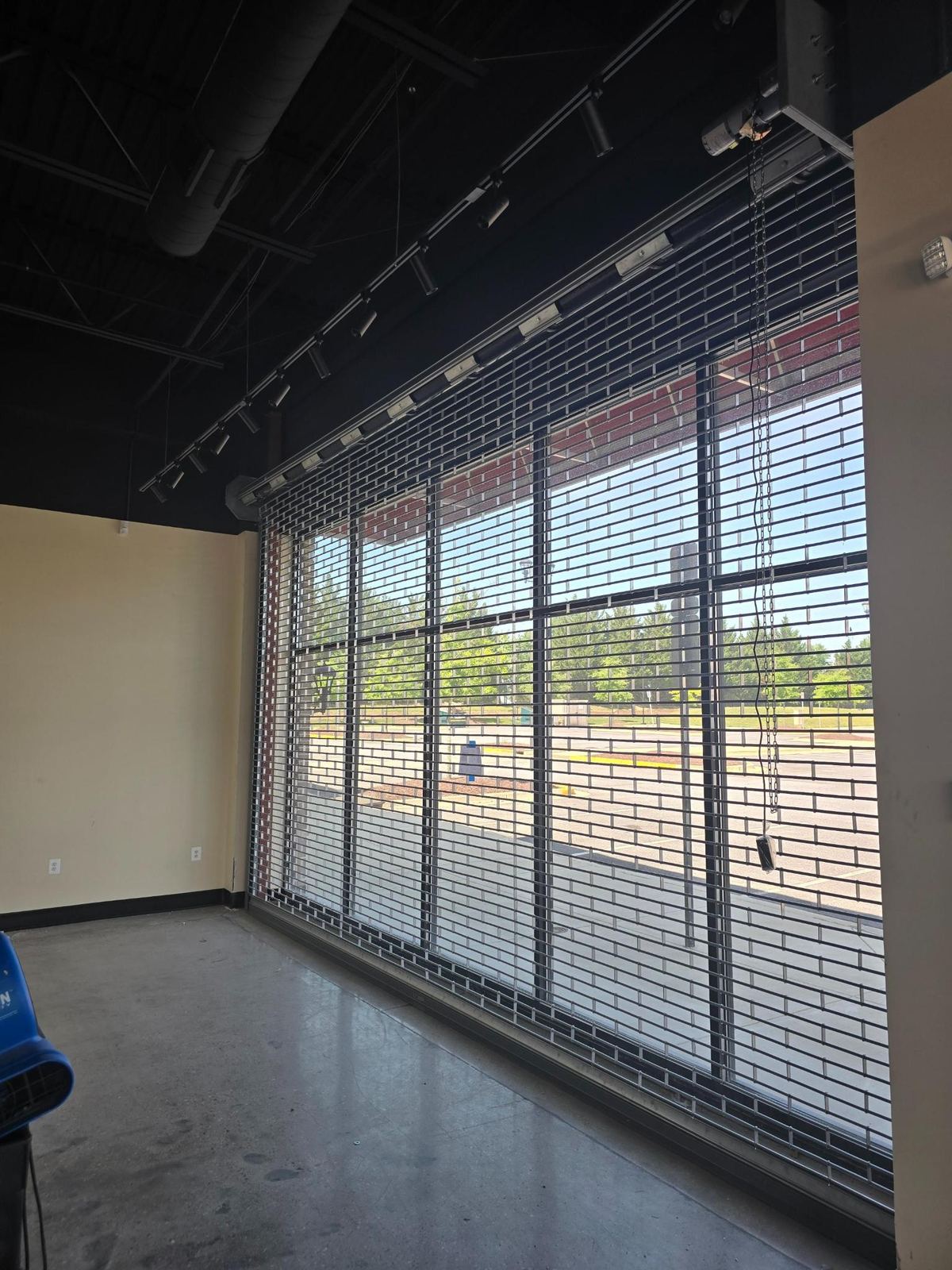
Grilles come in galvanized steel, stainless steel or aluminum, and can be operated by hand crank, push-up or motor (Cookson). For one retail client with high-value merchandise, we installed motor-operated grilles behind the full-height window walls, each with a manual chain hoist as a backup.
Inside or Outside the Glass?
Inside the glass (behind the storefront) is the common choice for retail. The grille is protected from weather, stays clean, doesn’t change the look of the building from the street and is easier to approve in a shopping center. It stops a smash-and-grab at the glass line.
Outside the glass protects the glass itself but changes the building’s exterior. In DC, work that affects the exterior appearance of a historic property is subject to historic preservation review (DC Office of Planning), and many retail landlords have rules of their own. Check both before ordering an exterior shutter.
Exits and the Fire Code
A grille across a door people use to leave the building is held to life-safety rules. The International Building Code, which DC’s construction codes are based on, allows security grilles at the main exit of business, mercantile and storage occupancies only if they can be opened from the inside without a key or special knowledge or effort, and limits them to no more than half of the required exits (MeyerFire, on IBC 1010). In practice that means:
- Grilles stay fully open while the store is open.
- Your exit route has to work when the grille is down and someone is still inside.
- Motor operators should have a manual release, so the grille can be raised without power.
We plan grille locations with your exits, your fire alarm and your landlord’s requirements in mind, so the grille protects the store without creating a code problem.
Locks, Operators and Everyday Use
- Locks. Manual grilles lock at the bottom rail or the side guides, and those cylinders should be high-security and keyed into your master key system. See our post on restricted keyways.
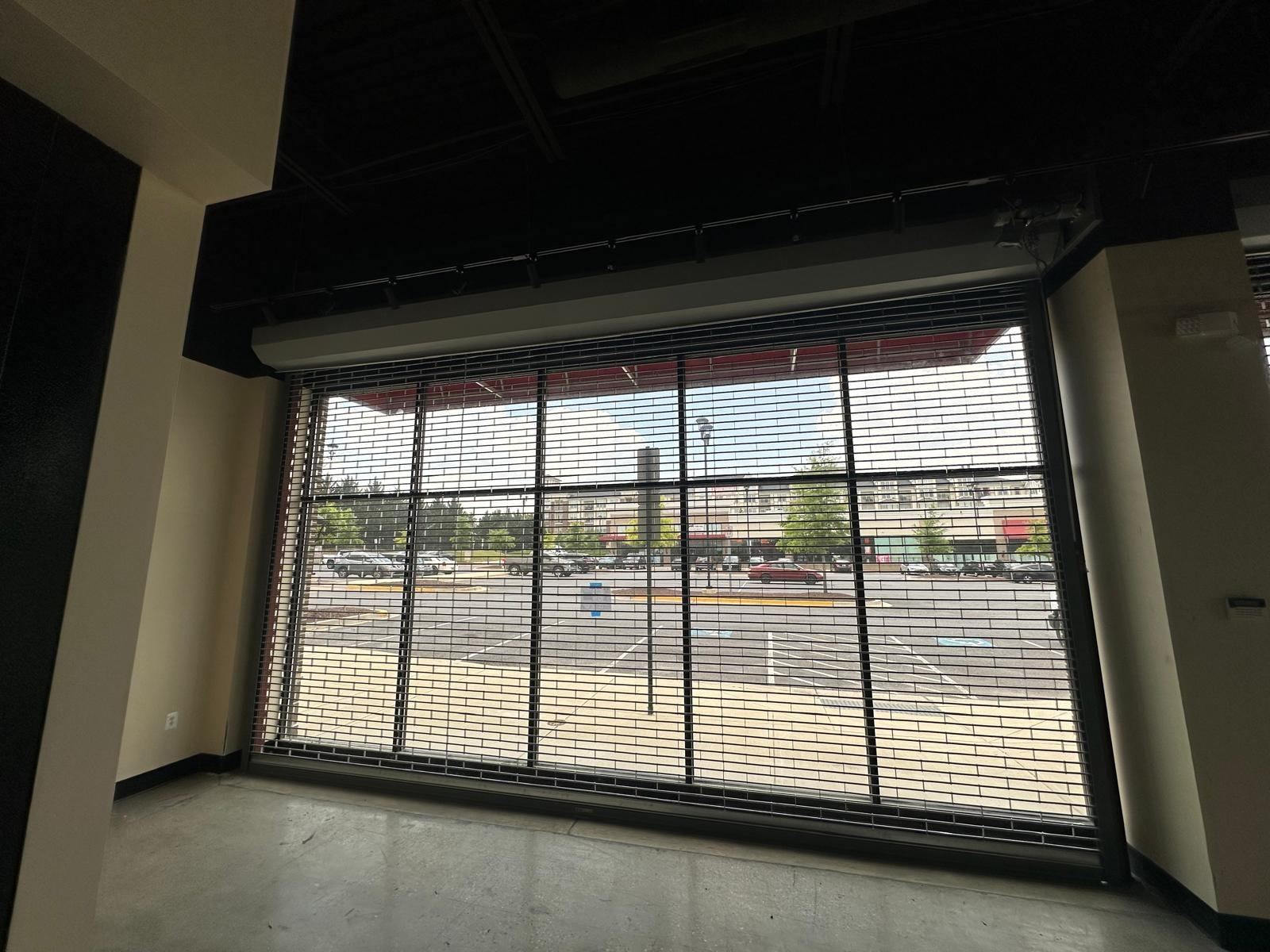
- Motor operators make large grilles easy to raise and lower every day and can be tied to a key switch or access control.
- Maintenance. Guides, springs and operators need periodic service. A grille that sticks halfway gets left open, and then it protects nothing.
Is a Grille Right for Your Store?
A grille makes the most sense if you sell high-value goods (electronics, jewelry, phones, liquor, designer clothing), have been hit before, have a large glass storefront, or have an insurer or landlord asking for better after-hours protection. Pair it with the basics in our storefront security guide: solid door hardware, a monitored alarm and cameras that cover the entrance.
Frequently Asked Questions
Can customers see my displays when the grille is down?
Yes. Open-curtain grilles keep the storefront visible, which is why retailers prefer them to solid shutters.
Can a grille be installed inside an existing storefront?
Usually. Interior grilles mount behind the glass with the hood above the opening. We measure the opening, the head room above it and the side clearances during the site visit.
Manual or motorized?
Small openings work well with manual push-up or crank grilles. Large window walls are much easier to live with on a motor operator, with a manual hoist as a backup.
Do you service existing grilles?
Yes. We repair sticking curtains, worn guides, broken springs and failed operators, and replace grille locks.
Get a Grille Quote
Call RBD Security at (202) 709-9466 or request a quote. We install and service rolling grilles and commercial roll-up doors for stores and businesses across Washington, DC, Maryland and Northern Virginia.