A safe that won’t open is stressful, especially when passports, cash, deeds or firearms are inside. The good news: most safe lockouts are caused by something simple, and most safes can be opened and put back into service. This guide covers why safes lock people out, what to try first, and what a safe technician does when the simple fixes don’t work.
Why Safes Lock People Out
Batteries. On electronic safes, weak or dead batteries are the most common cause. SentrySafe says most digital lock problems come down to low, dead or non-alkaline batteries (SentrySafe). A weak battery can still light the keypad and beep while lacking the power to actually move the lock (Liberty Safe).
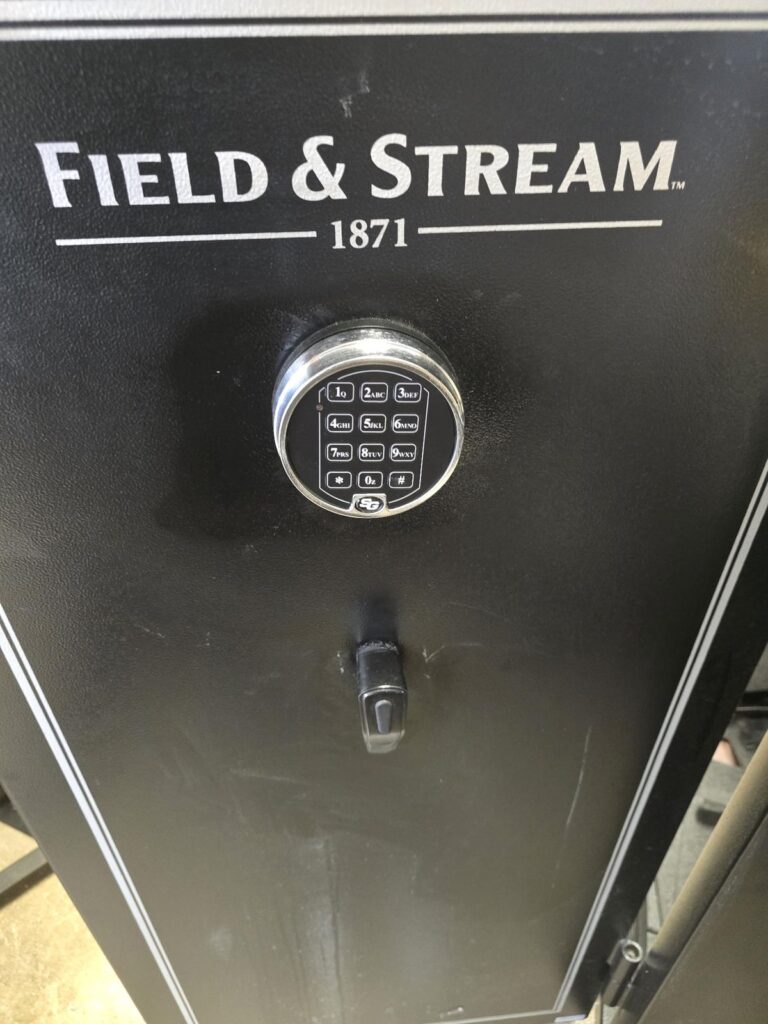
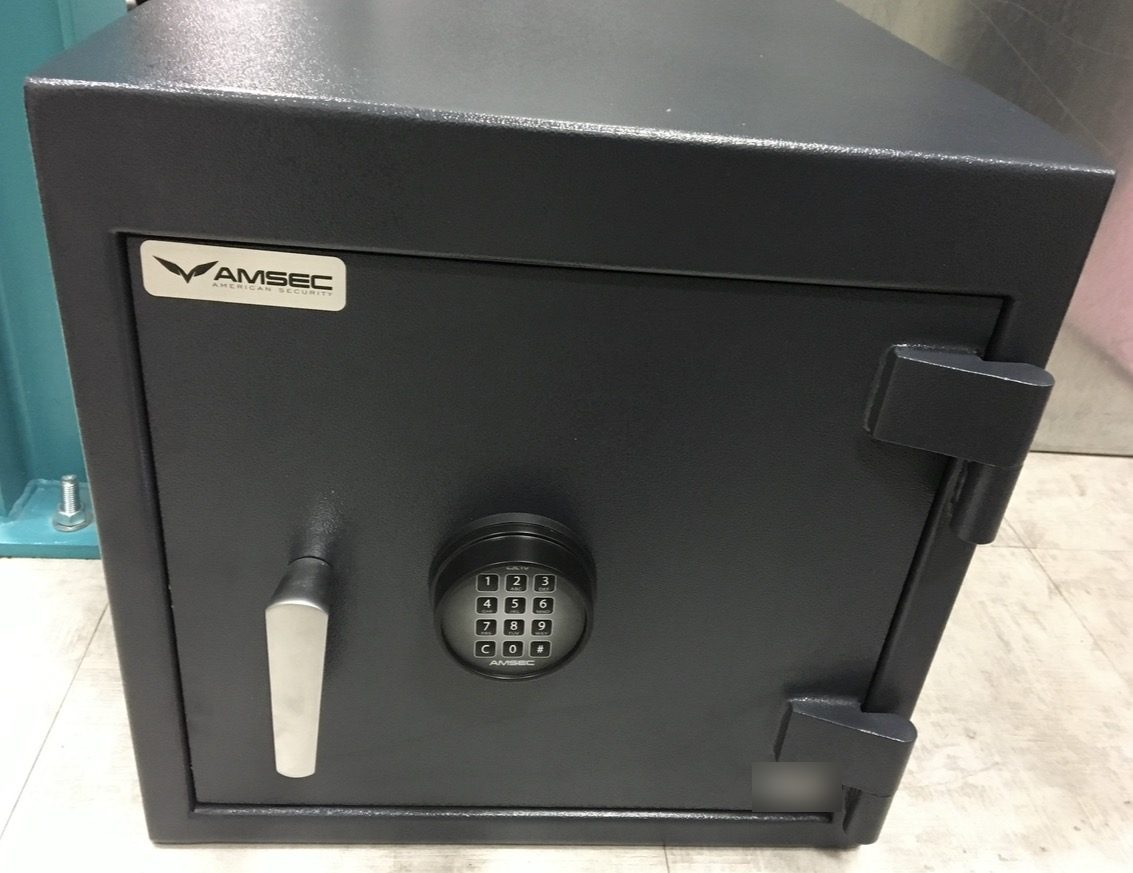
Wrong-code lockouts. Electronic safe locks shut down for a few minutes after several wrong codes in a row. On a Sargent & Greenleaf (S&G) 6120 lock it is 5 minutes after 4 wrong codes (S&G troubleshooting guide); AMSEC locks lock out for 15 minutes after 4 wrong attempts (AMSEC). Entering more codes during the penalty does not help, so wait it out.
Pressure on the bolt. If the door is pushed, or the handle is turned before the code is entered, the bolt can bind and the lock can’t retract it. S&G lists a bolt jammed by side pressure as one of its standard troubleshooting causes.
A worn or failed keypad, wiring or lock. Keypads wear out, wires break and locks fail with age. At that point the fix is a technician, not another battery.
A forgotten combination. Common with older dial safes and safes that came with a house or an office.
What to Try First
- Replace the batteries with fresh alkaline batteries. SentrySafe warns against rechargeable batteries and mixing old and new cells. S&G notes that “extra heavy duty” batteries are not alkaline.
- Wait out any lockout penalty, then enter the code slowly and once.
- Keep the handle at rest while you enter the code, and don’t lean on the door.
- Use the override key if your safe has one. SentrySafe’s own manual says not to keep the override key inside the safe (SentrySafe X-model manual).
If none of that works, stop. Forcing the handle or prying the door can damage the lock and the bolt work and turn a simple opening into a bigger repair.
What a Safe Technician Does
RBD Security works from the least invasive option to the most:
- Diagnose the lock. Power, keypad and wiring problems can often be fixed from the outside.
- Non-destructive opening where the lock and safe allow it.
- Re-coding to a new combination once the safe is open, and after staff changes, a move or a lost code.
- Lock repair or replacement, including swapping a failed keypad or converting an old dial to an electronic lock.
- Drilling, as a last resort. When a failed lock leaves no other way in, a trained technician drills a small hole at a precise point, opens the safe and then repairs it. Locksmith Ledger describes the goal of a professional opening as a small hole that can be repaired easily, so the safe can go back into service (Locksmith Ledger). In our shop, we weld the hole closed and fit a new lock.
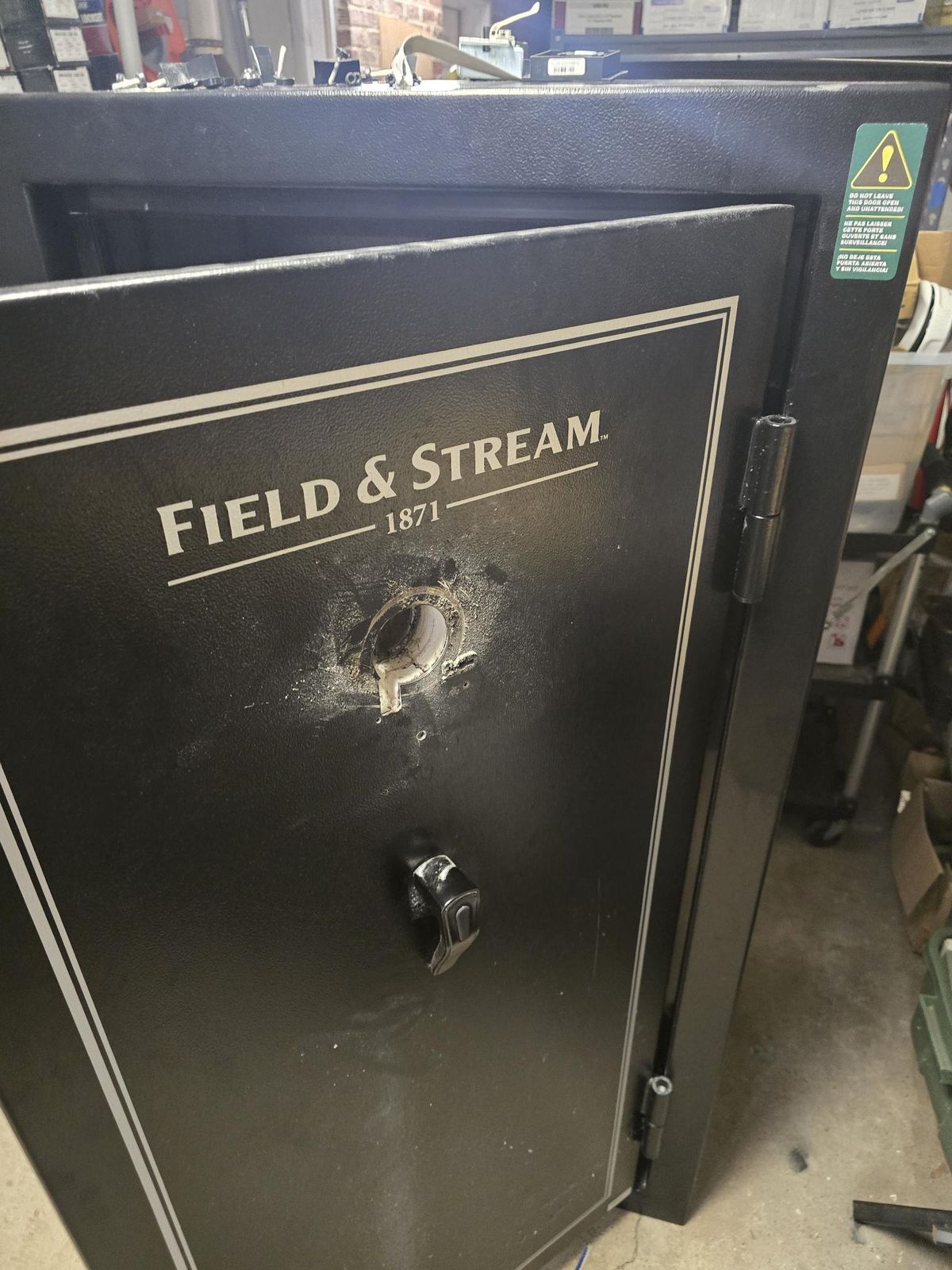
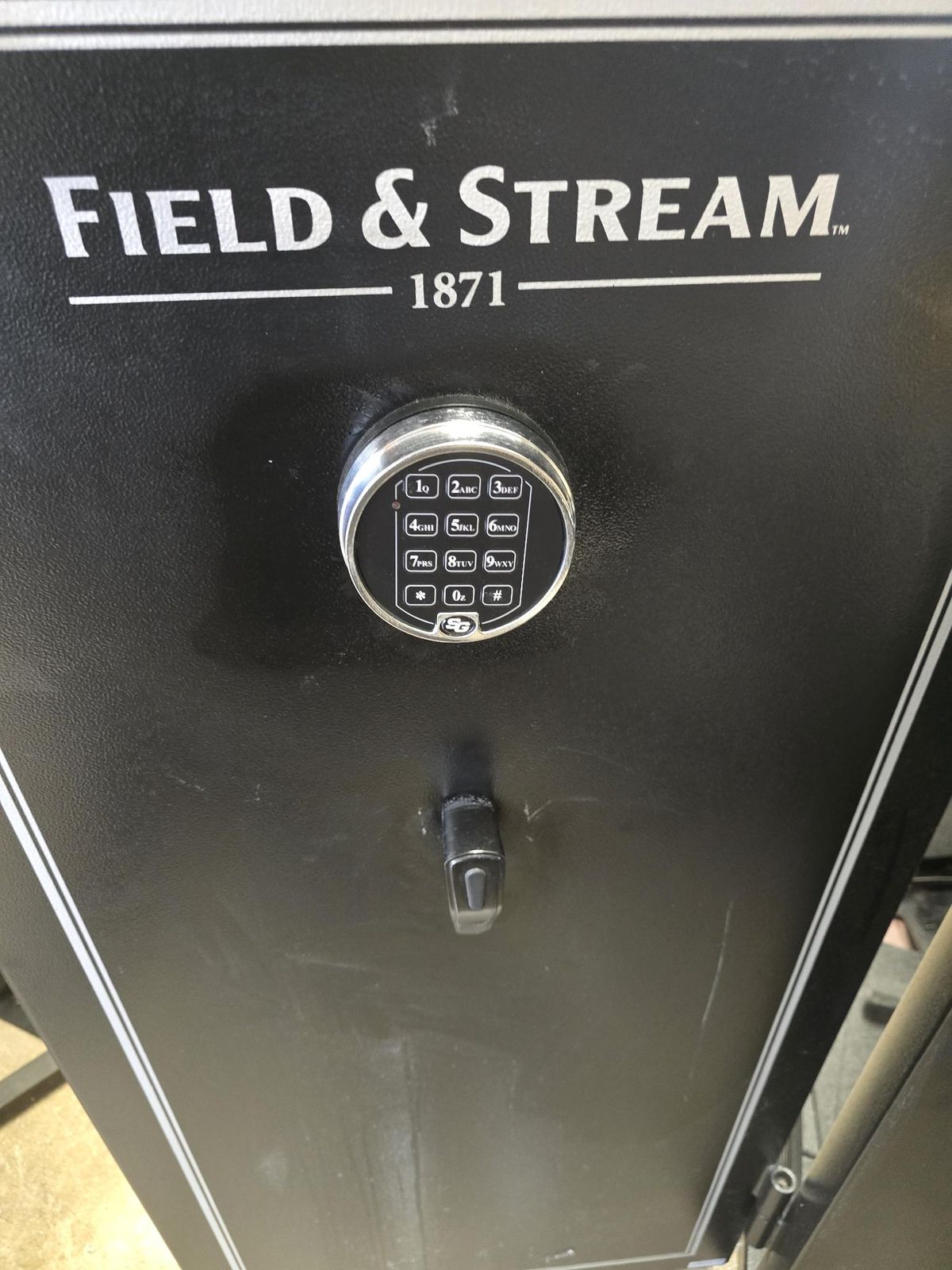
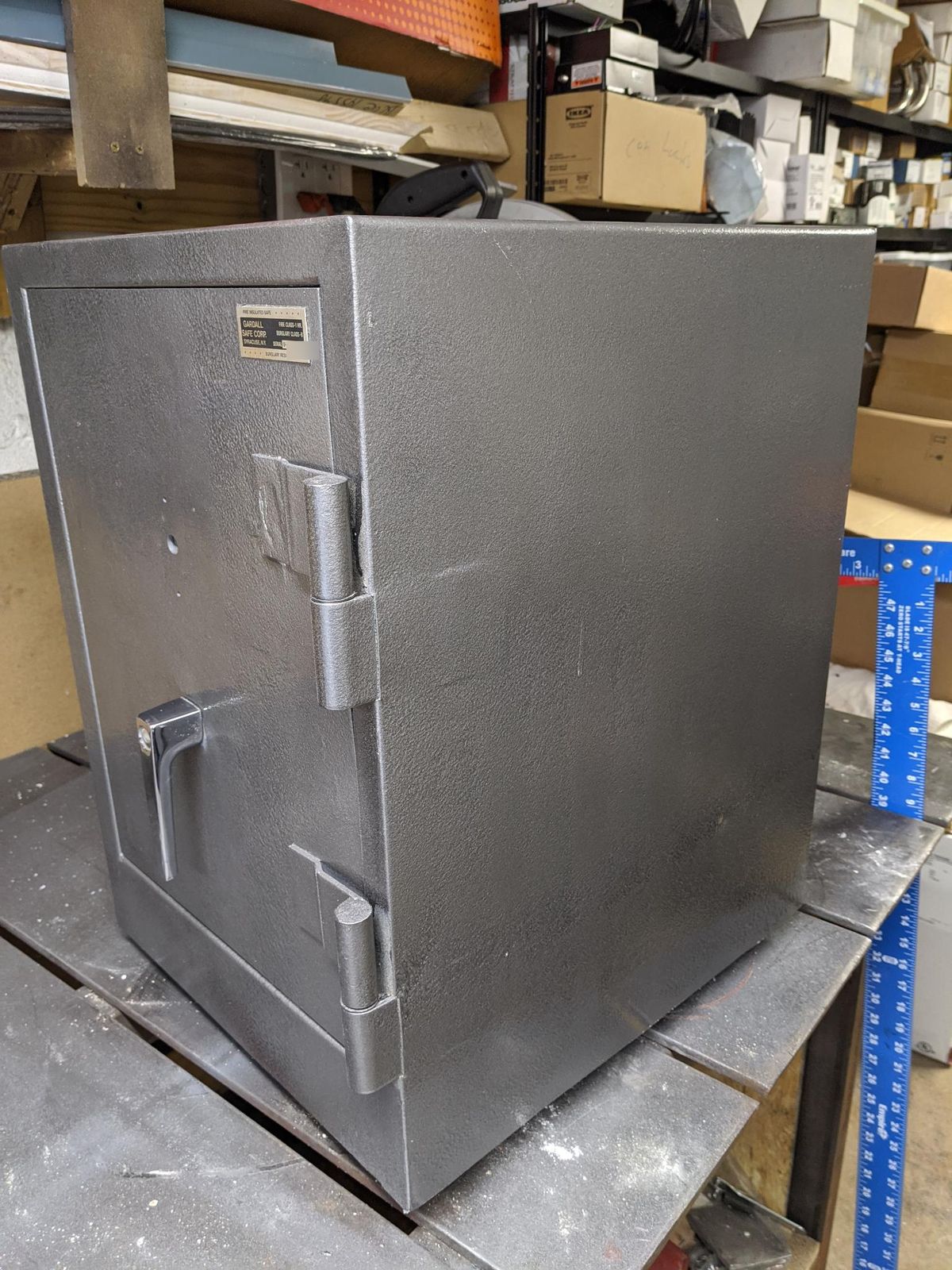
A drilled safe is not a ruined safe. The before-and-after above is a gun safe whose lock failed: drilled open, weld repaired and fitted with a new S&G electronic keypad. Below, a Gardall fire and burglary safe repaired and refinished in our shop, ready for its new lock.
Know What Your Safe Is Rated For
Once a safe is open, it is a good time to look at what it actually protects against:
- Fire ratings. A UL Class 350 1-hour rating means the inside stays below 350°F for an hour in a fire test; Class 125 ratings protect data media at lower temperatures (Dean Safe).
- Burglary ratings. UL TL-15 and TL-30 safes resist a skilled tool attack for 15 or 30 minutes of working time. A Residential Security Container (RSC), the common gun safe rating, is tested against a 5-minute attack with common hand tools (UL).
- Older safes often carry labels from earlier rating systems. If you inherited a safe, have a technician look at its labels and construction before trusting it with important things.
Our guide to the types of safes explains fire, burglary and specialty safes in more detail.
Avoiding the Next Lockout
- Change electronic lock batteries on a schedule. AMSEC recommends once a year (AMSEC).
- Watch for warnings: a changed beep or a low-battery light means replace the batteries now.
- Store the override key and the combination somewhere safe, but not inside the safe.
- Re-code after an employee leaves or after a move.
- Bolt the safe down. A safe that can be carried away can be opened somewhere else.
Frequently Asked Questions
Can you open my safe without damaging it?
Often, yes. Many lockouts are batteries, a lockout penalty, a jammed bolt or a failed keypad that can be fixed from the outside. Drilling is the last resort.
If my safe is drilled, do I need a new safe?
Usually not. A properly drilled safe is repaired and fitted with a new lock: we weld the opening closed and install the new lock.
Can you change my safe combination?
Yes. We re-code electronic and mechanical locks, and we can upgrade an old dial lock to an electronic keypad.
Do you work on gun safes?
Yes. We open, repair, re-code and bolt down gun safes as well as home, office and commercial safes.
Locked Out of a Safe?
Call RBD Security at (202) 709-9466 or see our safe and vault services. We open, repair, re-code and install safes for homes and businesses in Washington, DC, Maryland and Northern Virginia.