
A pedestrian gate lock should control who comes in while letting the people who use the property leave safely. For a side yard, alley entrance, courtyard or shared building entrance in Washington, DC, the right choice depends on the gate’s construction, the number of users, the power available at the gate, and the features you need.
This guide compares four common approaches: mechanical keypad locks, hardwired electric locks, solar-powered electronic systems, and battery-operated gate locks. It also covers how to tell whether a lock will fit your existing gate and what drives the cost of gate lock installation.
Start With How the Gate Is Used
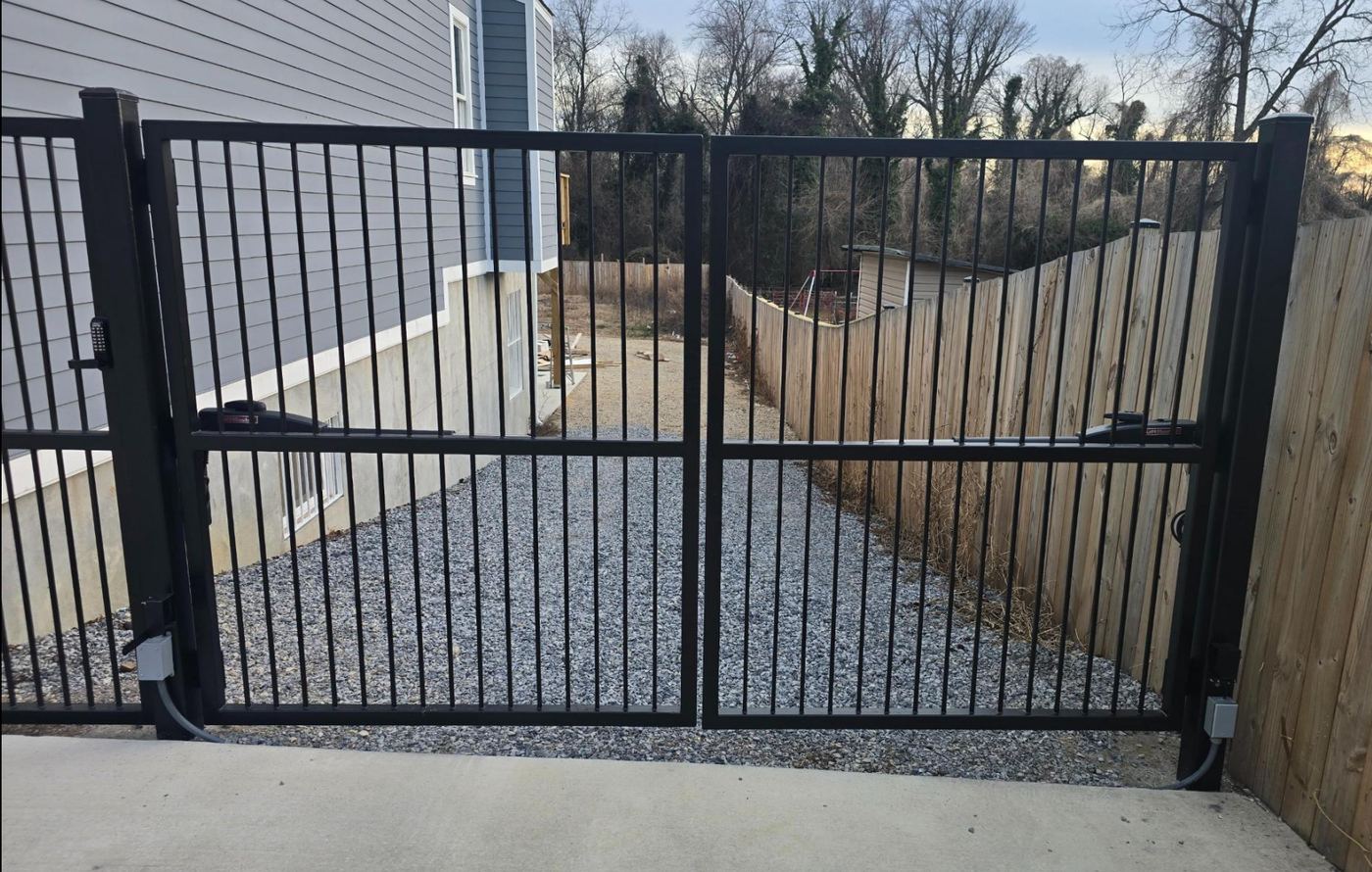
A pedestrian gate with a mechanical keypad lock next to an automated double swing driveway gate. RBD custom fabricated and installed both gates.
Before choosing hardware, answer a few questions:
- Who uses the gate? A household and its dog walker have different access needs from a building with 40 tenants, cleaners and delivery drivers.
- Do you need individual codes or a record of activity? If you want to remove one person’s access without changing everyone’s code, or see which code or credential was used and when, you need an electronic system.
- Is there power at the gate? Running wire to a gate post can mean trenching, conduit or coring through masonry. That cost often decides the approach.
- Do you need to unlock the gate remotely? Releasing the lock from a phone, intercom or front desk requires an electric lock and compatible controls. Unlocking the latch does not move the gate; a pedestrian gate is still pushed open by hand.
- Which side must open freely? Gates on an exit route, around a pool, or at a shared entrance have their own requirements.
Quick Comparison
| Setup | Power source | Codes and activity records | Remote unlocking | Main consideration |
|---|---|---|---|---|
| Mechanical keypad | None | Typically one shared code; no electronic log | No | Needs no electrical power, but offers limited control |
| Hardwired electronic system | Building power, optionally with battery backup | Available with a suitable keypad, controller and software | With compatible controls and communications | Cable routing, system features and exit operation |
| Solar-powered electronic system | Solar panel charging a battery | Depends on the selected controls | Depends on the controls and communications | Available sunlight, total electrical load and battery reserve |
| Battery-operated electronic lock | Batteries in the lock | Multiple codes on suitable models; logs vary | Model dependent; a gateway or other connection may be needed | Outdoor suitability, battery maintenance and supported features |
Mechanical Keypad Gate Locks: No Batteries, No Wiring
A mechanical keypad lock releases the latch through a push-button combination that works mechanically. There are no batteries to replace and no wiring to run, so it keeps working in a power outage and suits gates far from any outlet.
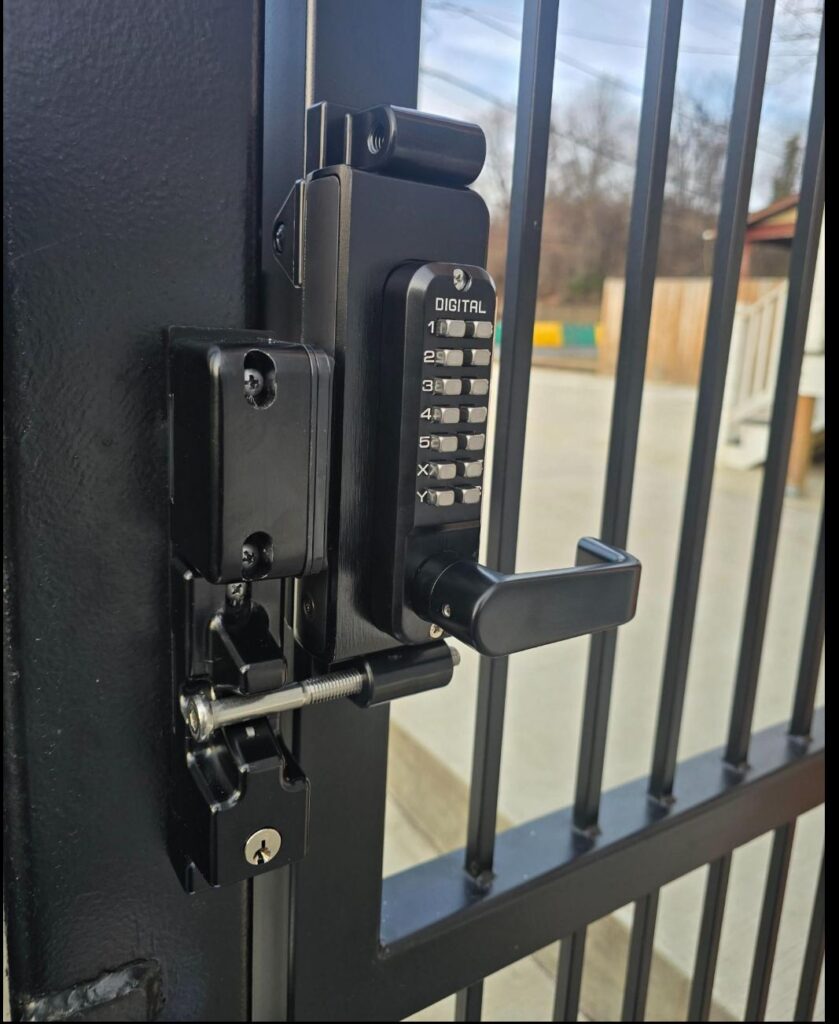
The lock shown at the top of this article is a Lockey SUMO that RBD installed on a steel pedestrian gate. According to Lockey, the SUMO GL2:
- Surface-mounts on compatible ornamental steel, aluminum, vinyl and wood gates, with no welding required.
- Uses a deadlocking latch with a strike that adjusts for gaps up to 2 inches.
- Holds one user code.
- Has a keyed cylinder that provides a lockout function: when it is locked, the keypad will not open the gate even with the correct code.
- Comes in marine-grade finishes for outdoor use.
Lockey also offers a passage setting and a double-combination version with a keypad on both sides. A keypad on both sides may be unsuitable where the gate must allow free exit, so confirm the exit requirements first.
The trade-offs: one shared code, no electronic record of activity, and no remote unlocking. Changing the code means working on the lock itself. For a private side yard, a pool equipment area or a small building, those limits are often acceptable. Entrances with frequent user changes may benefit from individual credentials and easier access management.
Lockey’s lifetime mechanical warranty for the SUMO requires a slam-prevention device on the gate. A gate stop and a properly adjusted closer also protect any latch from a gate that bangs shut.
Hardwired Electric Gate Locks
An electric strike, electric bolt or magnetic lock connected to a suitable access control system, keypad or intercom can support individual codes or cards, access schedules, event logs and remote unlocking. The features you actually get depend on the keypad, controller, intercom, software and connection selected. A simple keypad that triggers a relay may offer none of the record-keeping or off-site management.
Activity logs show which code or credential was used and when. They do not prove who walked through, because codes can be shared and a second person can follow the first.
The installation work is in getting power and low-voltage cable to the gate. That can mean trenching or conduit along a fence line. Some installations need a protected cable transfer to equipment on the moving gate leaf; others use an electric strike on the fixed post, which can simplify the wiring. Plan it before a new or rebuilt gate is finished.
Fail-secure hardware stays locked against entry when power to the lock is lost, and compatible mechanical exit hardware can still let people leave. Fail-safe hardware releases when power to the lock is lost; magnetic locks work this way. Select the locking and exit hardware together, based on the gate’s security needs and exit requirements.
Battery Backup
A power supply with a backup battery keeps an electric lock, keypad or card reader working through a utility outage for a limited time. How long depends on the battery, the current drawn by the lock and reader, the temperature, and how often the gate is used. Batteries need periodic testing and replacement, and the backup arrangement must preserve the gate’s required exit and emergency-release functions.
Plan how authorized users will get in during a system failure, using a supported key override or another suitable access arrangement.
Battery-Operated Gate Locks
Self-contained electronic gate locks run on batteries inside the lock. Suitable models hold multiple user codes, and some add Bluetooth or app access and an activity history. They avoid wiring but trade it for battery changes.
Bluetooth operation generally requires the user to be near the gate. Unlocking from another location may require a compatible gateway or another communications connection. Check the manufacturer’s operating-temperature range, battery recommendations and outdoor rating for the complete installed assembly: a front-door smart lock is not automatically suitable for an exposed gate.
Solar-Powered Electronic Systems
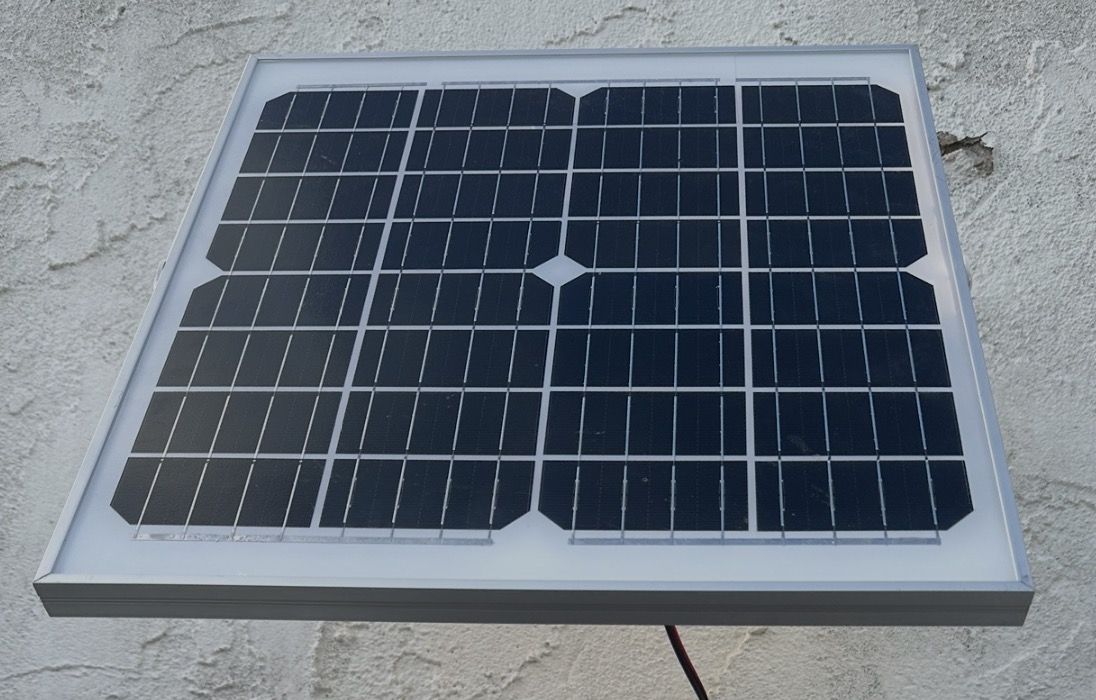
A small solar panel of the kind used to power a gate keypad or low-current lock.
Solar is a power arrangement, not a type of lock. Where running power is impractical, such as a long driveway, a detached lot or a garden gate across the yard, a solar panel charging a battery can power a low-current lock and a keypad or reader.
Solar needs honest sizing. The system has to cover the lock and keypad’s continuous standby draw, every unlock cycle, and a reserve for cloudy stretches. DC winter days are short, and trees, buildings and alley walls shade many gates for much of the day. If you want remote unlocking, the system also needs its own communications link. Keep the panel clean and expect to replace the battery over time. A continuously energized magnetic lock is generally a poor match for solar power.
Will a Keypad Lock Fit Your Existing Gate?
Many surface-mount gate locks are designed for retrofit, but the gate has to be ready for them. Before choosing a lock, check:
- Frame and post size: the lock and strike must suit the gate frame and the latch post.
- The gap: the space between gate and post must fall within the strike’s adjustment range.
- Hinges and alignment: a sagging gate or worn hinges will keep any latch from catching reliably.
- Closing: the gate should close consistently without slamming.
- Mounting surface: brackets need a flat, solid surface on both the gate and the post.
When the frame, post or mounting arrangement is not suitable, the gate can often be modified. RBD’s custom welding team can add a lock box, mounting plate or new post, repair hinges, or build a new gate.
Safety, Exit Routes, Pools and Historic Properties
A gate on a required exit route generally must let people leave without a key, code or special knowledge. The right hardware depends on the property’s use and the applicable exit and accessibility requirements.
Pool barrier gates have specific requirements for self-closing and self-latching hardware, latch release height and the direction the gate opens. Requirements differ for public pools, semi-public pools and private residential pools, and a pool equipment enclosure is not the same as a pool barrier gate. Check the code that applies to your property and any HOA or condo rules before choosing hardware.
For historic properties, gate or fence work that requires a permit and affects exterior appearance may also require preservation review.
What Affects Gate Lock Installation Cost in DC?
The cost depends on the scope, not just the lock. The main factors are:
- The lock and any keypad, reader or intercom hardware.
- The condition of the existing gate, hinges and post.
- Mounting fabrication or welding.
- Cable routing and whether power is available nearby.
- Integration with an intercom or access control system.
- A closer, gate stop and backup power.
How RBD Security Handles Pedestrian Gate Locks
RBD installs mechanical and electric pedestrian gate locks and can tie electric locks into intercoms and access control. Because RBD also designs, builds and installs gates, we can modify a gate that was never designed for a lock or build a new one. Line-voltage electrical work is handled by a licensed local electrician partner. See our gate installation and repair services in Washington, DC and pedestrian and vehicle gate options.
Frequently Asked Questions
Can I add a keypad lock to my existing metal gate?
Often, yes. Many surface-mount gate locks fit compatible metal gates without welding. The frame, post, gap, hinges and alignment need to suit the lock. If they do not, RBD can modify the gate or add a mounting plate.
Can I unlock a pedestrian gate from my phone?
Yes, with an electric lock and compatible controls, such as an access control system, an intercom, or a battery lock with a gateway. A mechanical keypad lock cannot be unlocked remotely.
Will the gate stay locked during a power outage?
A mechanical keypad lock is unaffected. An electric lock depends on its hardware and backup power: fail-secure hardware stays locked when power to the lock is lost, while fail-safe hardware releases. Plan how authorized users will get in during an outage.
Can a gate have a keypad on both sides?
Some gate locks offer a keypad on both sides. That arrangement may be unsuitable where the gate must allow free exit, so check the exit requirements first.
What affects gate lock installation cost in DC?
The lock and controls, the gate’s condition, any welding or mounting work, cable routing and power, intercom or access control integration, and closing hardware. A photo of both sides of the gate helps us scope the job.
Need a Lock for Your Pedestrian Gate?
Call RBD Security at (202) 709-9466 or request a gate lock installation quote. Send clear photos of both sides of the gate and the latch post, along with your location, the number of people who need access, and whether power is available nearby. Tell us whether you want a shared keypad code, individual user access, or unlocking through an intercom or phone, so we can assess the right options for your gate.