An older intercom does not always require a complete building rewire. Depending on the equipment and cabling, an upgrade may reuse existing conductors, replace selected components, or move a compatible telephone entry system from a landline to cellular service.
For a DC apartment building or condominium, start with three questions: What needs to work better? What infrastructure can the new system use? What will the building pay to operate and support it? The answers help narrow the choices before the board compares proposals.
For background, read our guides to intercom system types and telephone entry for vehicle gates.
When Is an Upgrade Worth Considering?
- Unreliable calls or door release. Static, one-way audio, failed buttons, and intermittent unlocking need diagnosis; the cause may be wiring, power, the panel, or the door hardware.
- Parts are becoming difficult to obtain. Compare a repair’s expected life with the cost of replacing the system.
- A telephone line is expensive or changing. Check the actual bill and any provider notice. Network modernization does not mean every building has the same disconnection deadline.
- Residents want to see visitors. Video can help verify a caller, although it does not by itself prevent someone following an authorized person through a door.
- The current answering method no longer fits. Some buildings need in-unit stations, some need remote phone answering, and some need both. Traditional telephone entry may already call residents’ mobile numbers.
- Access is difficult to manage. Shared codes and lost fobs can make it hard to control who gets in.
A site survey should distinguish repairable faults from limitations that justify an upgrade.
Compare the Main Upgrade Paths
| Approach | What it can provide | What to confirm |
|---|---|---|
| Wired video with in-unit stations | Residents answer on a dedicated screen; suitable designs can keep core calling local | Cable requirements, station capacity, power supplies, and any optional app fees |
| IP intercom | Audio and video over a network, with local stations or supported phone integrations | Network design, compatible endpoints, software licenses, and internet dependence |
| Cloud-managed intercom | Remote administration and supported app-based calling | Recurring fees, resident options, account ownership, and outage behavior |
| Cellular telephone entry | A way to keep a compatible call box while replacing its telephone-line connection | Exact model and board compatibility, signal strength, subscription, and backup power |
| Access-control retrofit hub | App-based unlocking or remote management of compatible existing doors or gates | Whether the scope adds calling or video, or only access control |
IP does not automatically mean cloud. A system can use the building’s network for local intercom calls. Cloud services, smartphone calling, and remote management are separate capabilities with their own requirements and costs.
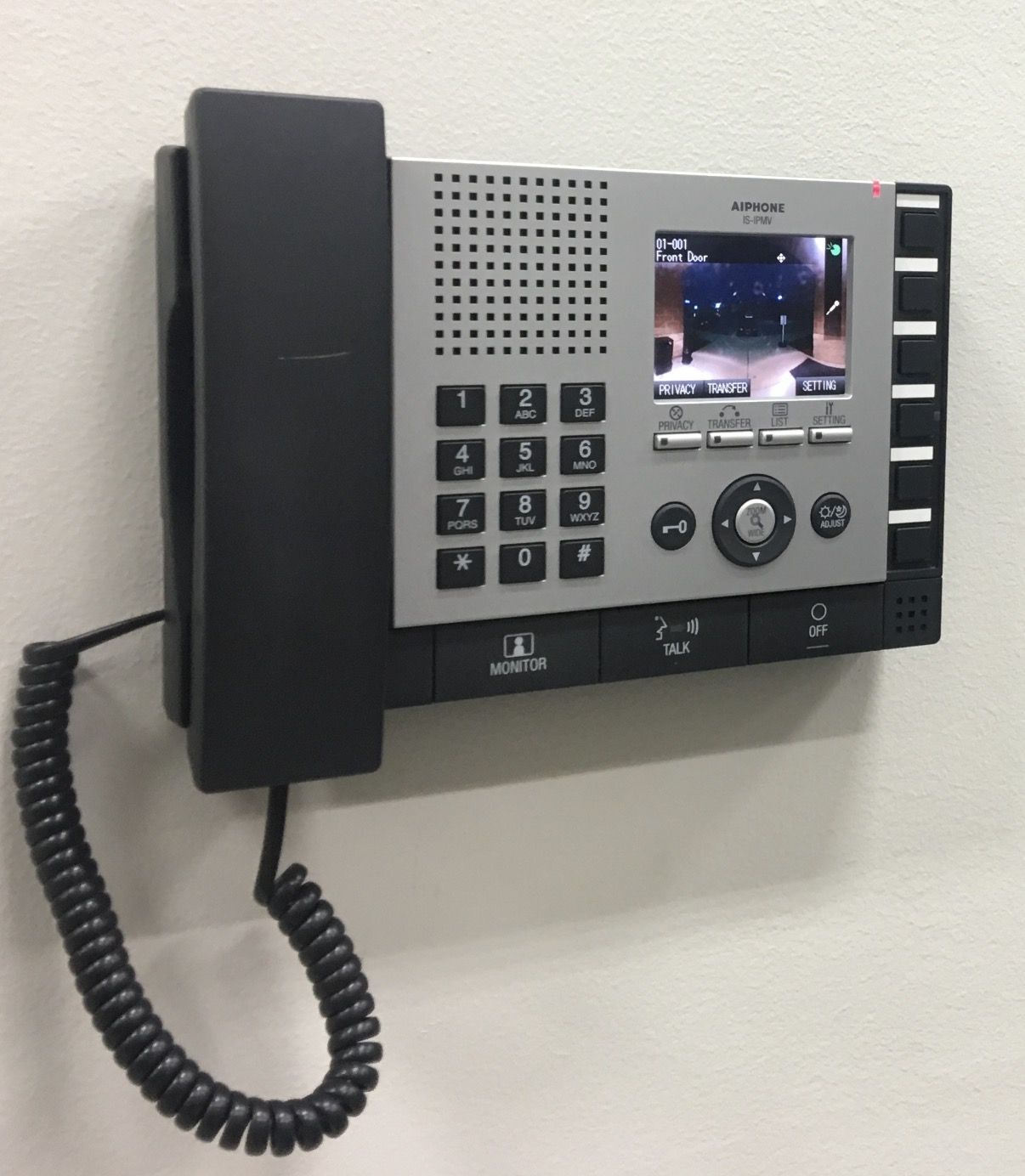
For example, Aiphone’s GT series supports retrofit applications using suitable existing wiring. Its design still needs to follow the requirements for the selected stations and system layout. A local wired installation may avoid a recurring cloud fee for core calls, while optional services can add charges.
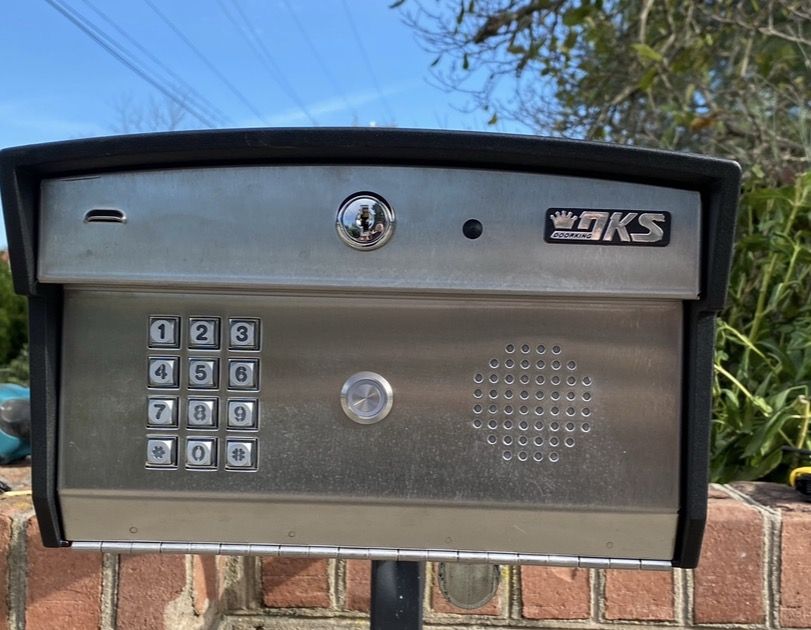
DoorKing’s cellular option can provide connectivity for compatible entry systems. It requires a service subscription, and some older systems need a circuit-board upgrade. It is not available for every DoorKing intercom and is not a 911 calling service.
LiftMaster’s CAPAC Smart Access Hub provides cloud-based management and control of compatible access points. Its subscription and resident app licenses should be included in the proposal. A retrofit access hub should not be assumed to turn an old audio call box into a video intercom.
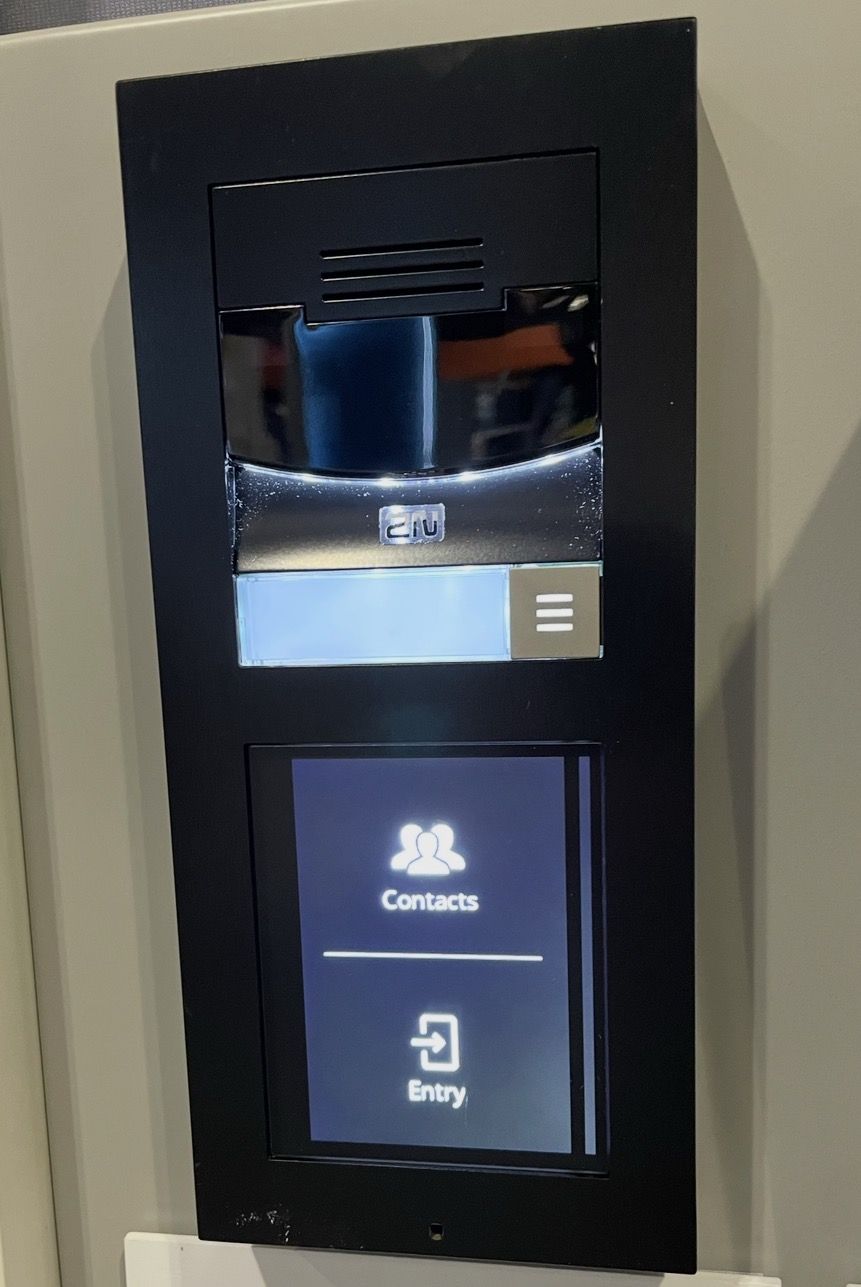

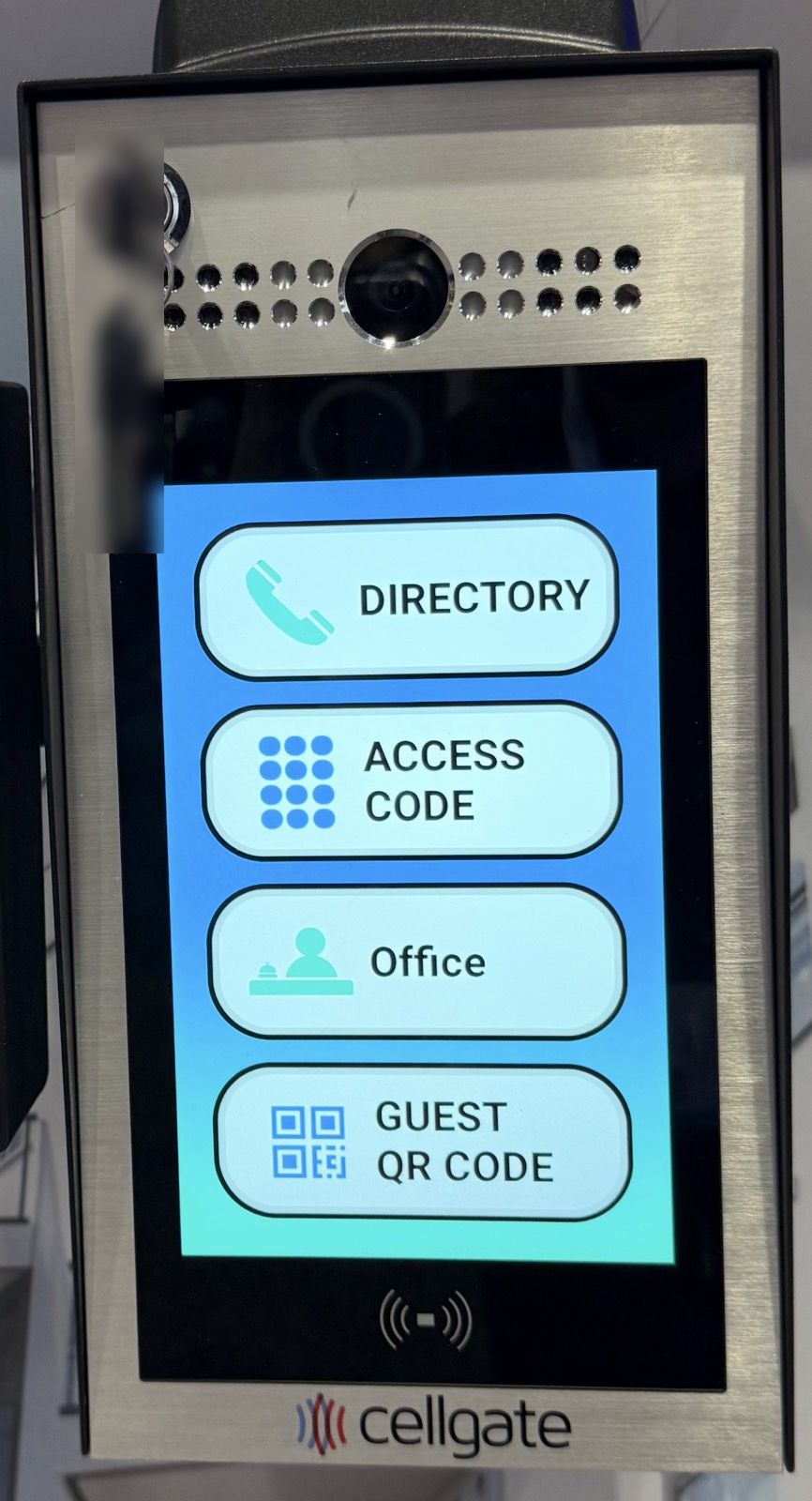
A few of the door stations RBD has installed: 2N, Mobotix and CellGate.
Can the Existing Wiring Be Reused?
Wiring reuse depends on more than whether the old system still works. The survey should identify conductor count, cable type, route lengths, branching, splices, electrical condition, and the new equipment’s power requirements.
Some systems carry audio, video, and power over a suitable two-conductor circuit. Others need separate circuits or additional power wiring. For example, Aiphone’s GT wiring documentation distinguishes audio and video conductors; do not assume a single old pair will support every GT configuration.
For selected IP devices, adapters such as 2N 2Wire can carry Ethernet over compatible existing wiring. An adapter is not a universal replacement for a properly designed network: permitted distances, topology, power, and device compatibility still apply.
Ask for the proposed reuse to be documented and tested. A practical design may retain suitable runs and replace only those that cannot meet the selected system’s requirements.
Check the Whole Entrance
Door hardware and safe exit
The intercom sends an unlock command, but the closer, hinges, latch, electric lock, and power supply determine whether the door operates reliably. Correct problems with closing and securing the door as part of the project.
The design must also preserve required exit operation. Ask the installer to document how the chosen locking arrangement works during normal use and relevant power or system failures, and to identify applicable permit and inspection requirements.
Existing cards and fobs
An intercom may be able to trigger an existing door controller without replacing the current fobs. That does not automatically mean the systems share a resident directory, credentials, or audit logs.
Confirm each required function against the exact products and software versions. If you want one place to add and remove residents, make directory synchronization an explicit requirement in the access control scope.
Deliveries
Discuss time-limited visitor access, dedicated package areas, and any supported delivery integration. Ask which carriers or service providers can use it, who authorizes access, what events are logged, and how access can be revoked.
If an Amazon Key option is proposed, confirm the specific service, eligibility, compatibility, and current commercial terms. Delivery access and a complete replacement intercom are different scopes.
Questions for Property Managers and Condo Boards
- What exactly will residents and visitors be able to do? Include an option for people who cannot or do not want to use a smartphone, and address relevant accessibility needs.
- Which wiring and hardware will remain? Request the survey findings and the limits of any reuse assumption.
- What is the total operating cost? Include installation, subscriptions, phone or cellular service, app licenses, maintenance, and expected renewal terms.
- Who controls the account and data? The building should understand administrator access, data export, and what happens when management or service providers change.
- What works during an outage? Evaluate visitor calls, resident entry, remote administration, and required exit operation separately.
- What does integration include? Door release, credential use, event logs, and directory synchronization are distinct functions.
- Can the project be phased? Specify which components are compatible at each stage, and whether an interim purchase will be reusable.
- How will the system be maintained? Identify responsibility for updates, account changes, backup power, and service response.
- What will be demonstrated at handover? Test calling, video, door release, credentials, selected outage scenarios, and administrator tasks.
How RBD Security Approaches an Intercom Upgrade
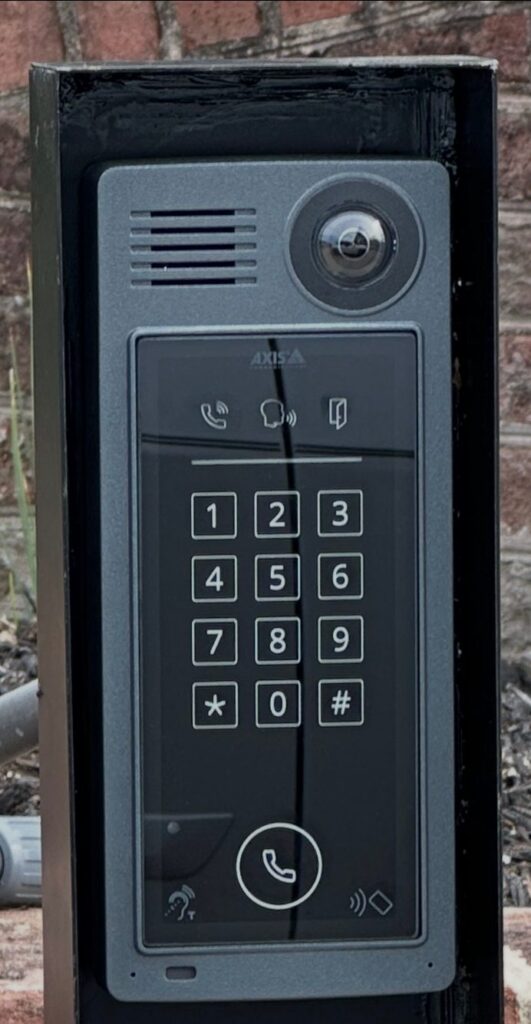
RBD starts with a survey of the entry panel, wiring, door hardware and any existing fob system. The board gets a written summary of what can be reused, the upgrade options, and the installation and recurring costs of each, so proposals can be compared on the same terms. RBD installs intercoms from Axis, 2N, Aiphone, DoorKing, CellGate, Mobotix, Akuvox, DoorBird and Ring. The Axis video intercom pictured at the top of this article, mounted on a custom welded steel post, is an RBD installation. We work with apartment buildings and condo associations across DC, including Dupont Circle and Adams Morgan, and in nearby Maryland and Virginia.
Frequently Asked Questions
Do we have to rewire the whole building to add video?
Not necessarily. Some installations can reuse suitable cable, but conductor count, layout, distance, condition, and power must match the proposed equipment. A survey should establish this before a firm reuse commitment.
Can we remove the landline from our telephone entry system?
Often, yes. A compatible cellular or IP solution is usually available. Confirm the call box model, board revision, signal or network connection, ongoing fees, and whether replacement is more practical.
Will residents need a smartphone?
That depends on the design. In-unit stations, conventional phone calls, and app-based answering are different options. Specify the required alternatives before selecting a system.
Will the new intercom work with our existing fobs?
It may. Keeping an existing credential system can be separate from replacing the intercom. Verify reader, credential, controller, and software compatibility rather than relying on brand names alone.
Arrange an Intercom Survey
Call RBD Security at (202) 709-9466 to discuss an intercom upgrade. Have the existing panel model, approximate unit count, number of entrances, and main problems ready. See our intercom services for more information.